

Can Saffron Really Help You Feel Calmer?
In today’s fast-paced world, stress has become almost unavoidable — especially for women balancing work, health, and family life. But what if one of the most powerful tools for calming the mind and balancing mood has been in your spice cabinet all along?
That’s where saffron, also known as zafran, enters the conversation.
Traditionally used for its color, aroma, and healing properties, saffron is now gaining recognition in modern wellness circles for its ability to support emotional wellbeing, reduce anxiety, and stabilize mood. Backed by both ancient wisdom and modern science, saffron could be the natural remedy your nervous system has been waiting for.

Top 5 Benefits of Saffron for Stress Relief
- Reduces anxiety and restlessness
- Enhances mood by boosting serotonin
- Supports hormonal balance and emotional stability
- Improves sleep quality and reduces nighttime overthinking
- Acts as a natural antidepressant — without the side effects
Why Saffron Works for Stress: The Science Behind the Spice
Saffron contains powerful compounds like crocin, safranal, and picrocrocin — all of which influence brain chemistry. Studies show that saffron can increase levels of serotonin and dopamine, the brain’s feel-good hormones that help regulate mood and stress.
Unlike many pharmaceutical options, saffron works gently and naturally, supporting your body’s own ability to find balance without creating dependency.
It also acts as an adaptogen, helping your body respond better to stress while protecting your brain from oxidative damage — which is often elevated during long-term emotional strain.
Saffron for Hormonal Stress in Women
Hormonal shifts — especially around PMS, PCOS, perimenopause, or postnatal periods — can intensify stress, anxiety, and mood swings. Saffron helps regulate hormones like cortisol and estrogen, making it especially effective for women facing hormone-related emotional imbalances.
Regular use has been shown to reduce symptoms such as:
- Irritability
- Mood drops before menstruation
- Nervous tension during hormonal shifts
- Emotional fatigue related to adrenal burnout
Daily Use: How to Take Saffron for Stress Relief
Saffron can be consumed in several gentle, nourishing ways. The key is consistency and correct dosage — typically 30–50mg per day (about 2–4 strands).
Best Daily Methods:
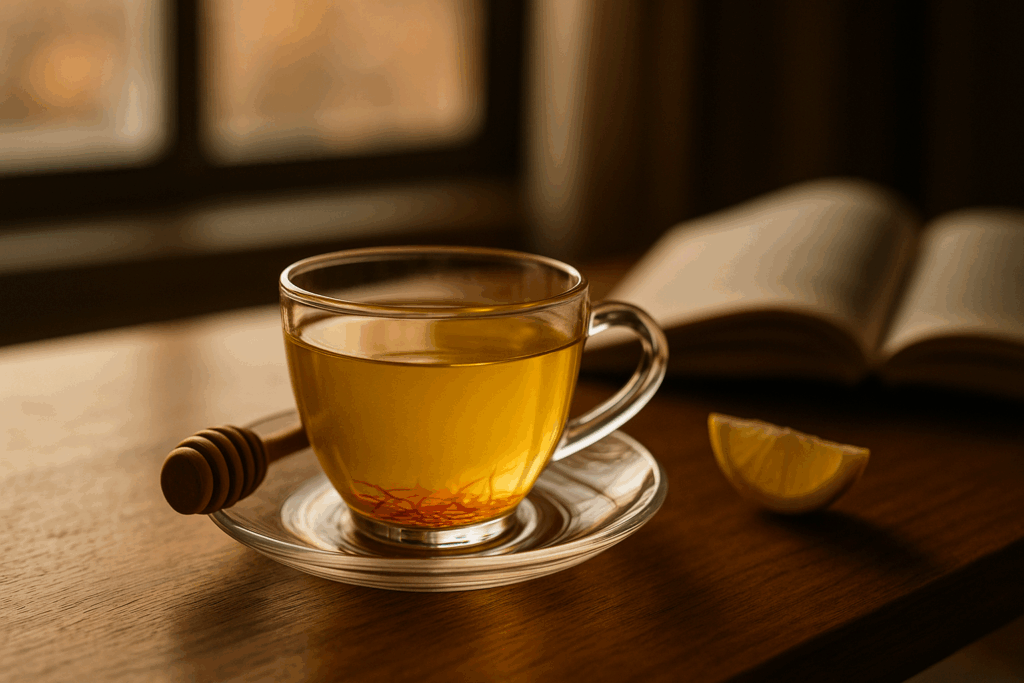
- Saffron Tea: Steep 3–5 strands in warm water with lemon or honey
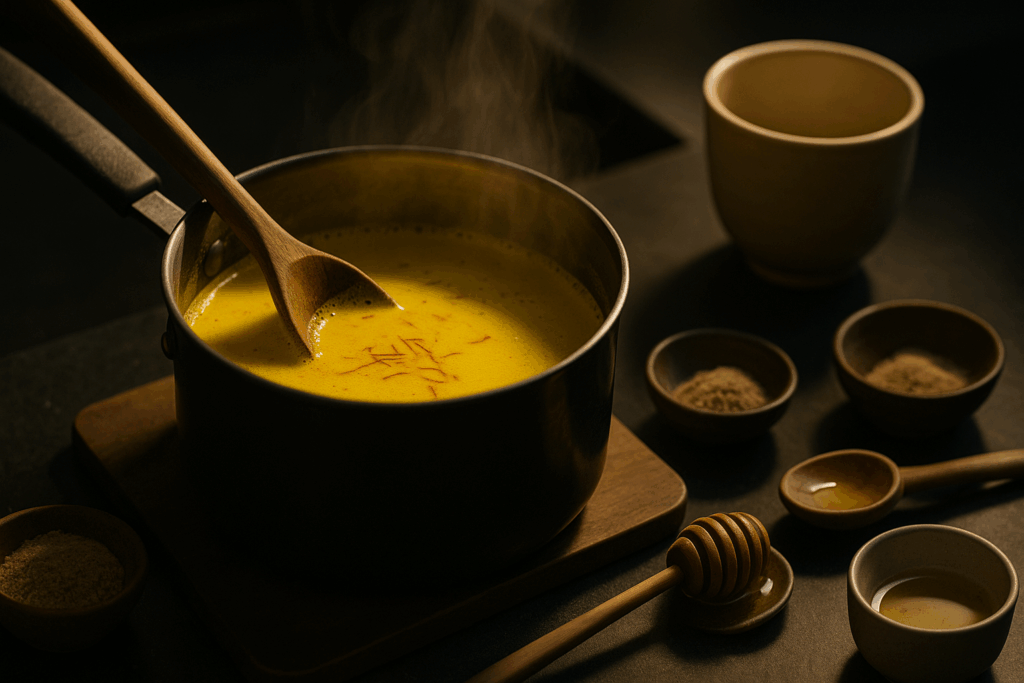
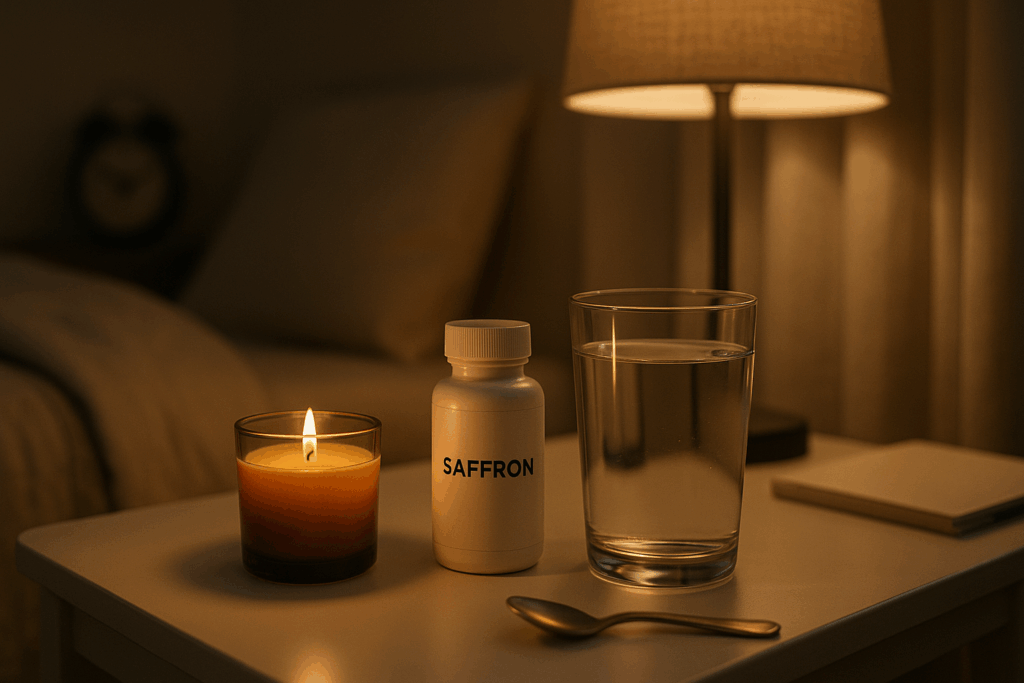
- Golden Milk with Saffron: Add a few strands to warm milk with turmeric before bed
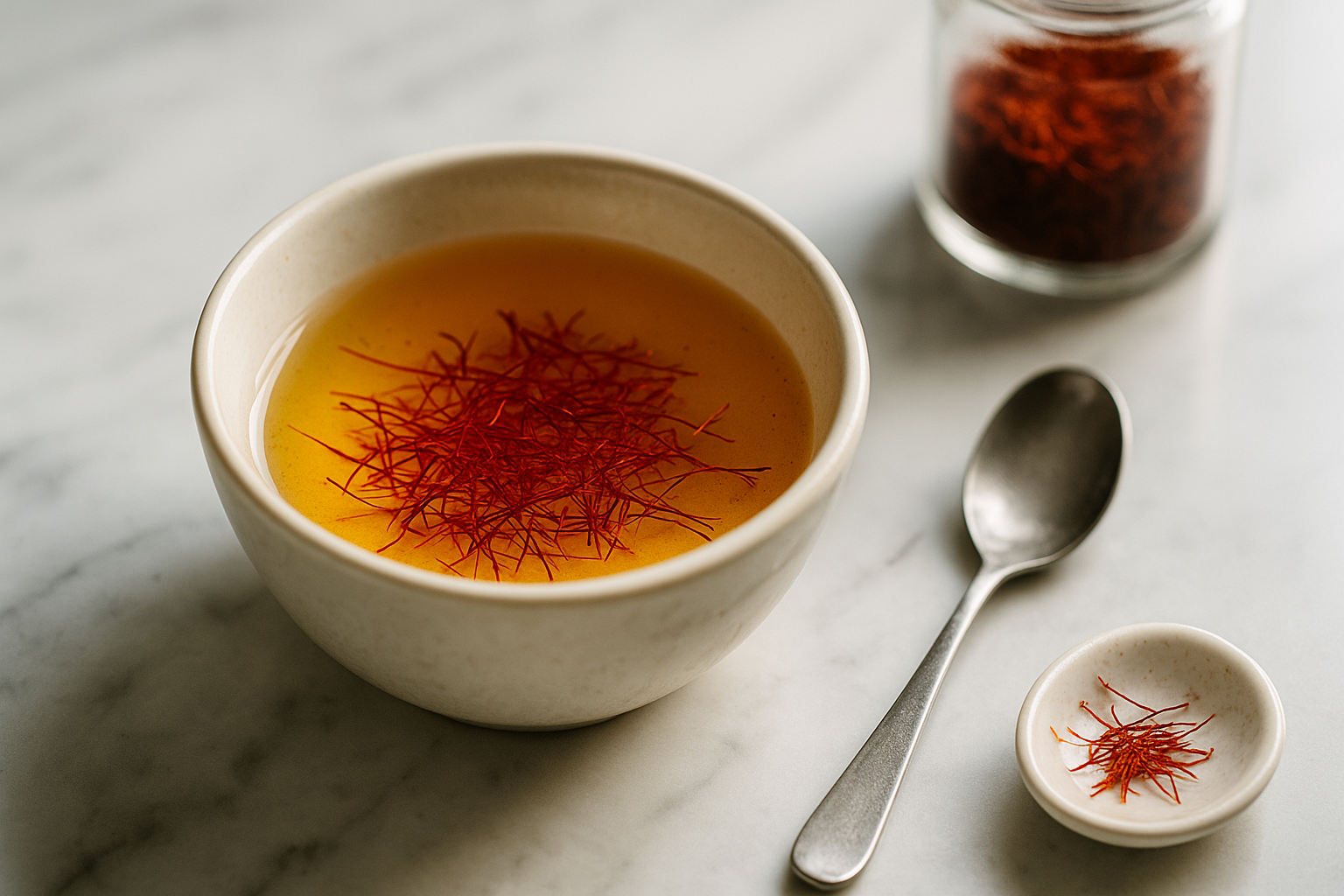
- Saffron Water: Soak in warm water and drink on an empty stomach
- Smoothies: Add soaked saffron strands to a banana-almond smoothie
- Supplement Form: Available in capsules — choose clinically tested, pure saffron extract
Quick & Easy Recipe: Calming Saffron Moon Milk
This warm, soothing drink is ideal before bed or during high-stress moments.
Ingredients:
- 1 cup almond or oat milk
- 3–5 saffron strands (soaked in 1 tbsp warm water for 10 min)
- ¼ tsp cinnamon
- ½ tsp ashwagandha powder (optional)
- 1 tsp raw honey (optional)
Instructions:
Warm milk gently. Stir in saffron water, cinnamon, and ashwagandha. Do not boil. Sweeten with honey and sip slowly. Promotes deep relaxation, hormone support, and restful sleep.
Tips for Buying and Storing Saffron
- Choose deep red threads, not orange or yellow
- Pure saffron should have a strong aroma and bitter taste
- Store in a dark, airtight container away from moisture
- Buy from trusted sources — avoid powdered saffron unless certified
- Use just a few strands — a little goes a long way
FAQs
Q: How long does it take for saffron to reduce stress?
Most users report noticeable calmness and mood improvement within 1–2 weeks of consistent use.
Q: Can saffron be used alongside medication?
In most cases, yes — but always check with a healthcare provider if you’re on antidepressants or anti-anxiety medication.
Q: Does saffron help with sleep?
Yes. Its calming effect supports better sleep by lowering cortisol and improving serotonin levels.
Q: Is saffron safe for daily use?
Yes, when taken in safe amounts (30–50mg daily or 2–4 strands), saffron is considered safe and effective for regular use.
Q: Can saffron help with PMS-related mood swings?
Absolutely. Saffron is proven to ease mood drops, irritability, and anxiety related to the menstrual cycle
Final Thoughts: A Natural Remedy for the Modern Mind
Saffron is not just a culinary luxury — it’s a holistic wellness tool that supports emotional resilience, hormonal balance, and nervous system health.
Whether you’re managing daily stress, hormonal mood swings, or just seeking more calm in your life, saffron offers a natural, gentle, and time-tested solution. Start small, stay consistent, and let this golden spice remind your body what balance feels like.