



Introduction: The Question No One Wants to Ask
Roti is part of our identity.
We grew up on it. Our mothers made it daily. Our plates don’t feel complete without it.
So when someone says roti is causing belly fat, it feels wrong.
But here’s the real question:
Is it roti… or is it the type of flour we’re using today?
If you’re experiencing bloating after meals, stubborn belly fat, or feeling heavy despite eating “normal portions,” this article will explain what’s actually happening inside your body — and how to fix it without giving up your culture.
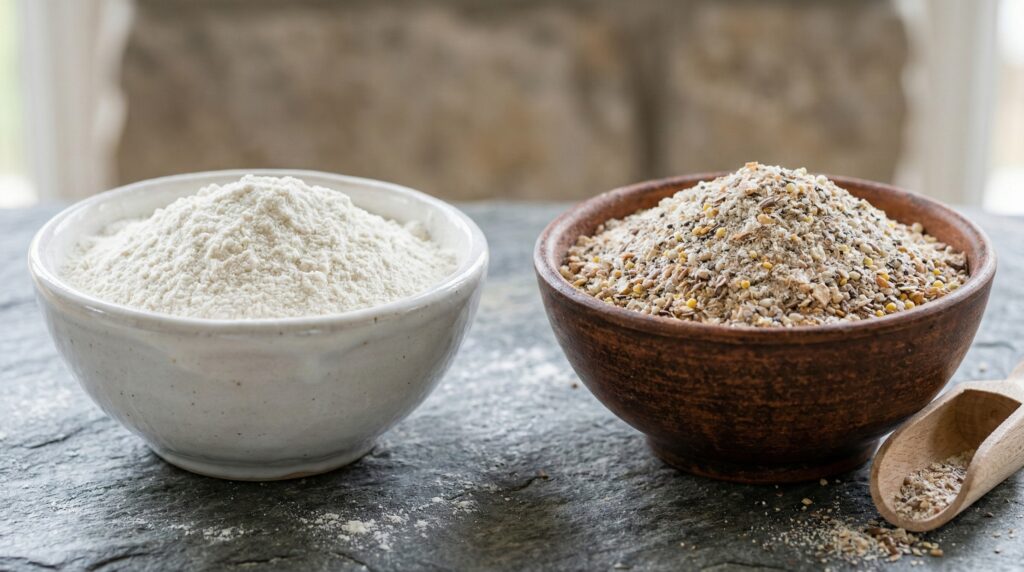
The Real Issue: Refined Flour and Fat Storage
Most commercial atta today is heavily refined.
During processing:
- The bran (fiber-rich outer layer) is removed
- Micronutrients like magnesium, zinc, and B vitamins are reduced
- The glycemic index increases
This refined flour behaves differently in your body.
When you eat it:
- Blood sugar rises quickly
- Insulin spikes
- Excess glucose is stored as fat
- Hunger returns sooner
Over time, repeated insulin spikes contribute to abdominal fat accumulation.
A study published in The American Journal of Clinical Nutrition found that individuals consuming whole grains had significantly lower visceral fat compared to those consuming refined grains.
So yes — white flour belly fat is a real metabolic response.
Why Belly Fat Appears First
When insulin and cortisol (stress hormone) remain elevated:
- Fat storage increases
- Metabolism slows
- Fat accumulates around the abdomen
That’s why many people say:
“I don’t eat much, but my stomach keeps growing.”
It’s not just about calories. It’s about blood sugar control and fiber intake.
Does Roti Cause Weight Gain?
The honest answer:
Roti made from refined flour can contribute to weight gain if eaten regularly without sufficient fiber and protein balance.
But whole-grain roti behaves differently.
High-fiber flour slows digestion, stabilizes glucose levels, and improves satiety.
Instead of eliminating roti, upgrading your flour is the smarter strategy.
The Better Alternative: Upgrade Your Atta
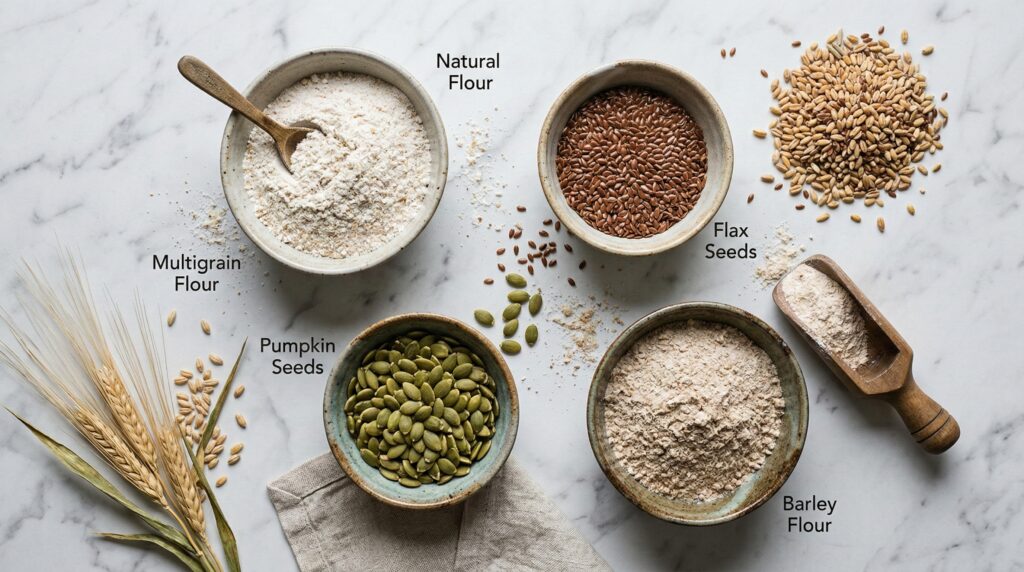
Switching to Organic & Pure Multigrain Flour increases:
- Dietary fiber
- Micronutrient intake
- Digestive efficiency
- Blood sugar stability
Whole grains release glucose slowly. This reduces fat storage signals.
For even better results, combine it with:
- Organic & Pure Flax Seeds (rich in soluble fiber & omega-3)
- Organic & Pure Pumpkin Seeds (zinc & magnesium support metabolism)
- Organic & Pure Glow & Balance Seed Mix (Contains zinc and vitamin E that help maintain healthy-looking skin.)
- Organic & Pure Wellness Bundle (combines nutrient-rich nuts, aromatic spices, and traditional herbal teas)
These upgrades transform your daily roti into a metabolic-friendly staple.
Research-Based Benefits of Fiber & Whole Grains
1. Fiber and Fat Loss
Soluble fiber slows digestion and reduces appetite. Studies show higher fiber intake is associated with lower body weight and waist circumference.
2. Whole Grains and Insulin Sensitivity
Whole grains improve insulin response, reducing fat storage triggers.
3. Beta-Glucan in Barley
Barley’s beta-glucan has been shown to lower post-meal blood sugar levels.
4. Flax Seeds and Waist Reduction
Flax seeds contain lignans and fiber that may support improved metabolic markers when consumed consistently.
These aren’t trends. These are well-documented nutritional mechanisms.
A Simple Daily Upgrade Plan
Morning:
- Warm water
- 1 tablespoon ground Organic & Pure Flax Seeds
Lunch:
- 1–2 rotis made with Organic & Pure Multigrain Flour
- Balanced vegetables and protein
Evening:
- Handful of Organic & Pure Pumpkin Seeds
Dinner:
- Smaller portion, fiber-focused meal
Consistency matters more than extreme dieting.
Quick & Easy Belly-Friendly Multigrain Roti Recipe
High-Fiber Soft Roti
Ingredients:
- 1 cup Organic & Pure Multigrain Flour
- 1 tablespoon ground flax seeds
- Warm water
- Pinch of salt
Method:
- Combine flour and flax seeds.
- Add warm water gradually.
- Knead into soft dough.
- Rest for 10 minutes.
- Roll thin and cook on medium heat.
Soft. Nutritious. Blood sugar friendly.

What Changes You Can Expect
Within 2–3 weeks of switching to high-fiber flour:
- Reduced bloating
- More stable energy
- Less afternoon crashes
- Better digestion
- Gradual reduction in abdominal heaviness
Weight loss is not about removing food.
It’s about choosing the right version of it.
Final Thoughts
Belly fat from roti isn’t about tradition.
It’s about refinement.
Our grandparents ate whole grains.
We eat processed versions.
The solution isn’t extreme dieting.
It’s intelligent upgrading.
Start with:
- Organic & Pure Multigrain Flour
- Organic & Pure Flax Seeds
- Organic & Pure Pumpkin Seeds
- Organic & Pure Barley Flour
- Organic & Pure Seed Cycling Kit
Your kitchen determines your metabolism.
Fix the foundation first.