

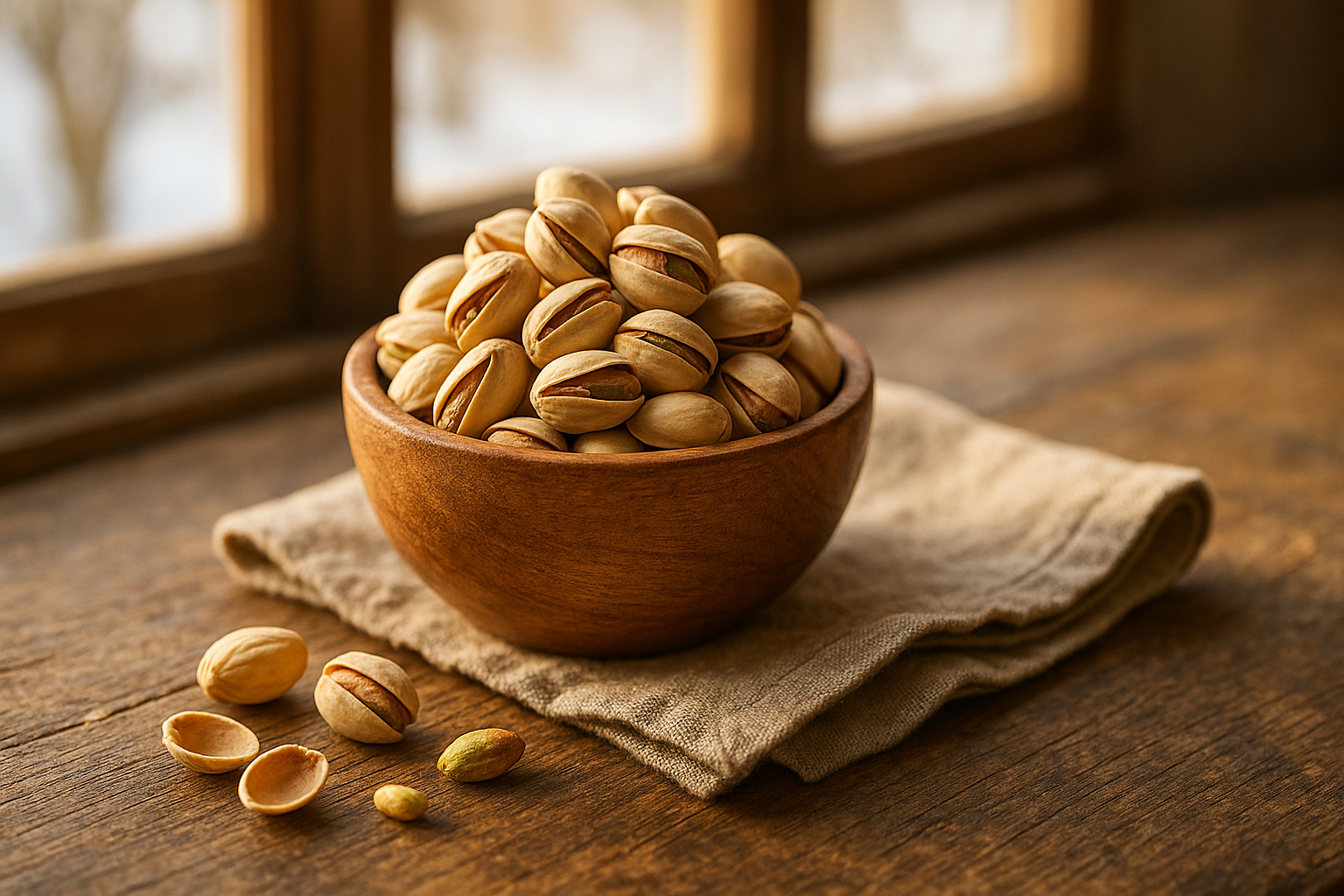

A Crunchy Superfood for a Sharper, Healthier Winter
As winter sets in, your body naturally craves warmth, nourishment, and mental clarity. One of the best dry fruits to meet all three needs? Pistachios. These small green nuts are brain boosters, energy stabilizers, and immune supporters, making them an ideal snack for the colder months.
Whether you’re trying to improve focus, balance hormones, or simply snack smarter, adding pistachios to your winter diet is one of the easiest ways to nourish your mind and body — naturally.

Top 6 Health Benefits of Pistachios for Brain and Body
- Improve memory, learning, and cognitive performance
- Provide healthy fats that protect brain cells
- Stabilize mood and reduce winter-related brain fog
- Support heart health and circulation to the brain
- Offer steady energy through protein and fiber
- Strengthen immunity with antioxidants and vitamin B6
Why Pistachios Are a Brain-Boosting Winter Essential
Your brain thrives on healthy fats, protein, antioxidants, and B vitamins — all of which are richly found in pistachios.
- Monounsaturated and polyunsaturated fats nourish brain cells and reduce inflammation
- Vitamin B6 helps produce serotonin and dopamine — key neurotransmitters for mood and focus
- Lutein and zeaxanthin protect eyes and cognitive function
- Potassium and magnesium enhance mental clarity and reduce anxiety
Pistachios are one of the few nuts that offer all of these in a small, satisfying serving.
Nutritional Composition of Pistachios (per 28g / ~49 kernels)
- Calories: 159
- Protein: 6g
- Fiber: 3g
- Fat: 13g (mostly healthy unsaturated fats)
- Vitamin B6: 0.5mg (25% DV)
- Magnesium: 34mg
- Potassium: 290mg
- Lutein & Zeaxanthin: ~1,400 mcg
- Antioxidants: polyphenols, flavonoids
Pistachios are nutritionally dense, making them an excellent choice for women looking to support mental function, energy, and hormonal balance.
Pistachios and Hormonal Brain Fog
Many women experience brain fog, forgetfulness, and mood swings due to fluctuating hormones — particularly during PMS, perimenopause, or under chronic stress.
Pistachios help by:
- Reducing inflammation in the brain
- Supporting dopamine and serotonin production
- Providing steady energy (no blood sugar crashes)
- Delivering zinc and magnesium, which support mental clarity and emotional balance
Adding a small portion daily can help reduce brain fog and improve mental stamina.
Daily Use: How to Add Pistachios to Your Winter Routine
Suggested Daily Intake:
- 1 to 1.5 ounces (about 30–45 grams), preferably unsalted and in-shell for mindful snacking
Best Times to Eat:
- Mid-morning: boosts focus
- Pre-lunch or afternoon snack: stabilizes energy
- Evening: combined with warm tea to ease stress
Easy Additions:
- Sprinkle over oatmeal or yogurt
- Blend into smoothies for healthy fat
- Crush over roasted veggies or grain bowls
- Add to herbal teas as a warming snack
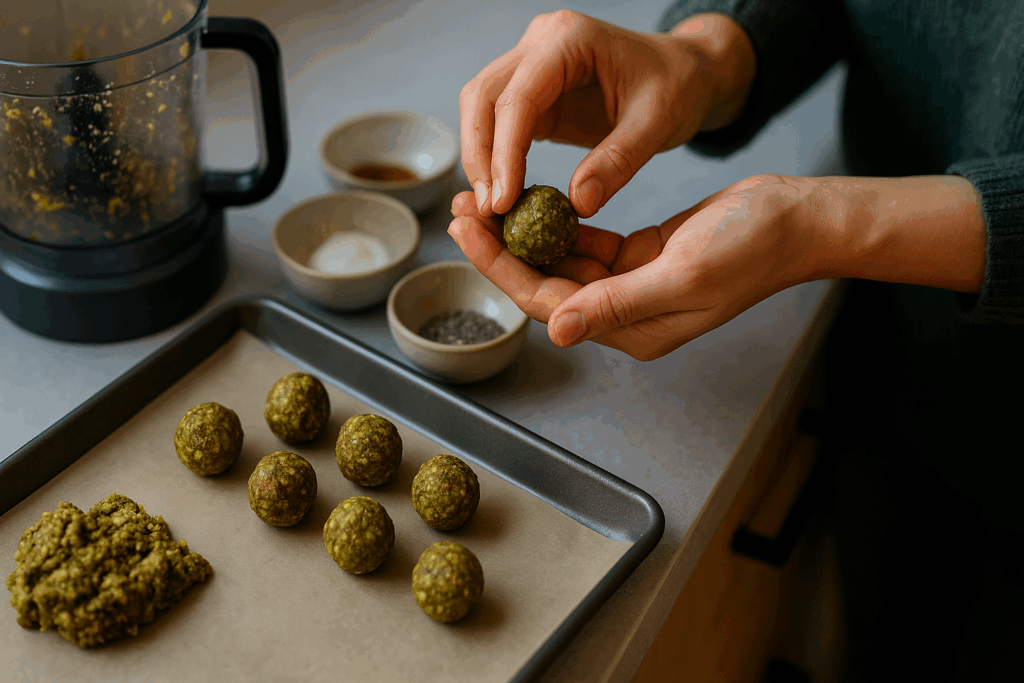
Quick & Easy Recipe: Pistachio & Date Brain Snack Balls
Ingredients:
- ½ cup pistachios (shelled)
- 6 soft dates (pitted)
- 1 tbsp coconut oil
- Pinch of cinnamon
- Optional: 1 tsp chia or flaxseeds
Instructions:
Blend all ingredients in a food processor until dough-like. Roll into small balls and refrigerate. Enjoy 1–2 daily for a brain-boosting, hormone-friendly snack.
Tips for Buying and Storing Pistachios
- Choose raw or dry-roasted pistachios without added oils or salt
- Opt for in-shell if possible — they encourage slower, more mindful eating
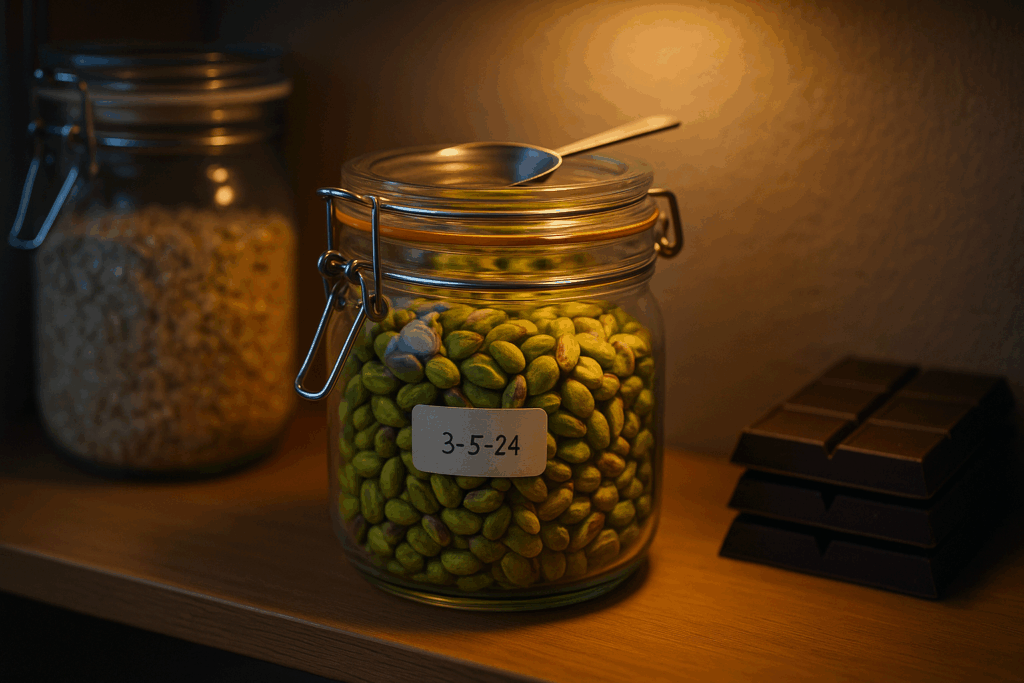
- Store in an airtight container in a cool, dark place
- Use crushed pistachios as a healthier alternative to croutons or breadcrumbs
- Avoid flavored pistachios with added sugar or sodium
FAQs
Q: Are pistachios really good for brain health?
Yes. They contain healthy fats, antioxidants, vitamin B6, and magnesium — all essential for cognitive function, focus, and memory.
Q: How many pistachios should I eat per day?
About 1–1.5 ounces (30–45g) is ideal — roughly a small handful or 49 kernels.
Q: Can pistachios help with brain fog or stress?
Yes. Their nutrients support neurotransmitters that regulate mood and reduce inflammation, which helps clear brain fog and stabilize emotions.
Q: Are pistachios good for women’s hormones?
Yes. They support healthy fats, reduce cortisol, and contain nutrients like zinc and magnesium that benefit hormonal balance.
Q: What’s the best way to eat pistachios for brain health?
Combine with fiber and protein, such as in smoothies, yogurt bowls, or snack balls with dates and seeds.
Final Thoughts: Nourish Your Brain Naturally This Winter
In a season where energy dips and mental fatigue are common, pistachios offer a natural, delicious solution. They do more than satisfy cravings — they support focus, mood, memory, and hormone health.
Add them to your daily snack rotation or build simple recipes around them. The results? Better concentration, fewer mood swings, and a calmer, sharper mind — all from a handful of nature’s most powerful brain food.