



A Small Nut with Big Winter Benefits
As the days get shorter and colder, your body naturally craves comfort, warmth, and energy. That’s where almonds come in. These nutrient-dense nuts are more than just a crunchy snack — they’re a winter wellness essential, especially for women looking to support energy, immunity, skin health, and hormone balance.
Let’s explore why almonds should be a daily part of your winter diet, how they boost energy naturally, and the best ways to enjoy them for optimal health.
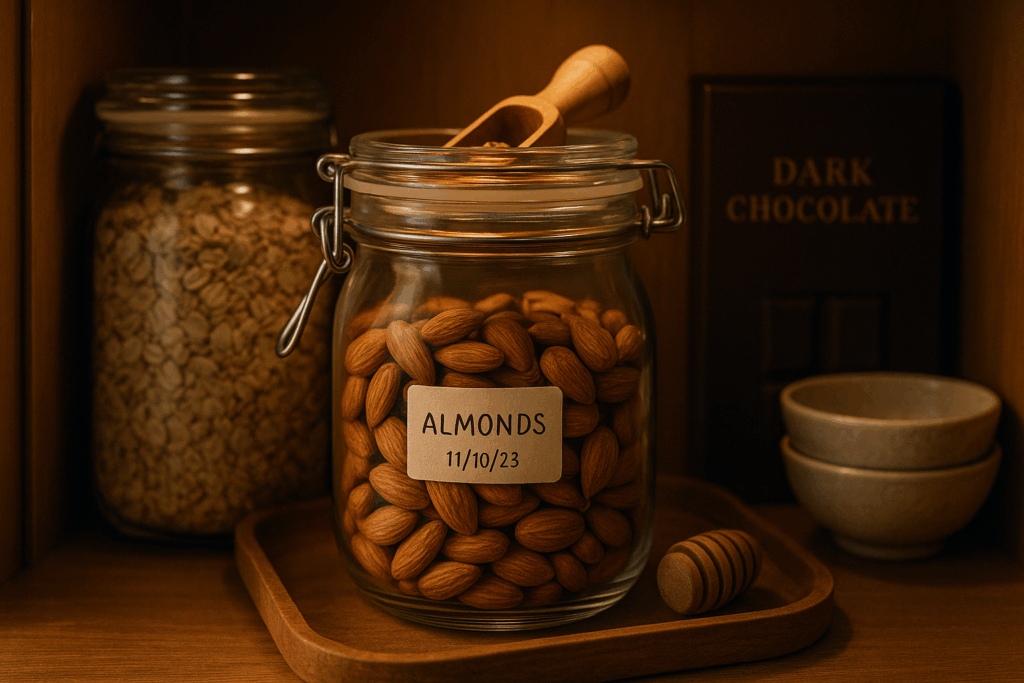
Top 6 Health Benefits of Almonds for Energy and Winter Wellness
- Provide long-lasting energy with healthy fats and protein
- Support immunity with antioxidants and vitamin E
- Nourish skin and hair during dry winter months
- Stabilize blood sugar and reduce cravings
- Improve brain function and mood
- Support hormone balance and metabolism
Why Almonds Are a Winter Energy Powerhouse
Almonds are rich in healthy monounsaturated fats, plant-based protein, and complex carbohydrates — the ideal trio for stable, sustained energy throughout the day. Unlike sugary snacks or refined carbs, almonds keep you full and energized without blood sugar crashes.
They also contain magnesium, which helps convert food into energy, and riboflavin (vitamin B2), which supports mitochondrial function — your body’s natural energy factories.
Nutritional Composition of Almonds (per 28g / ~23 nuts)
- Calories: 164
- Protein: 6g
- Fat: 14g (9g monounsaturated)
- Fiber: 3.5g
- Magnesium: 76mg
- Vitamin E: 7.3mg (37% DV)
- Riboflavin (B2): 0.3mg
- Calcium: 76mg
- Iron: 1.1mg
Almonds are nutritionally dense but balanced, making them ideal for weight management, hormone health, and energy production — especially during winter when nutrient needs are higher.
Almonds and Women’s Hormonal Health
Many women feel more tired, moody, or sluggish in winter due to:
- Lower vitamin D and B levels
- Increased cortisol (stress hormone)
- Poor blood sugar regulation
- Hormonal imbalances (PMS, perimenopause, etc.)
Almonds help by:
- Regulating cortisol through magnesium
- Supporting estrogen balance with vitamin E
- Reducing PMS symptoms with healthy fats
- Nourishing adrenal glands, which support hormone production
Including a handful of almonds daily can support energy, hormone health, and emotional stability naturally.
Daily Use: How to Add Almonds to Your Winter Diet
Suggested Daily Intake:
- 20–25 almonds per day (raw or soaked)
Best Times to Eat:
- Morning: with breakfast or added to porridge
- Afternoon: as a snack to prevent energy dips
- Evening: in warm almond milk for relaxation and skin glow
Soaked Almonds vs. Raw:
- Soaking almonds (overnight) improves digestibility and nutrient absorption
- Removes tannins and enzyme inhibitors found in almond skin
- Ideal for women with weak digestion or hormonal imbalance
Quick & Easy Recipe: Warm Almond Elixir for Energy
Ingredients:
- 10 soaked almonds (peeled)
- 1 cup warm almond or dairy milk
- 1 pinch turmeric
- 1 pinch cinnamon
- 1 tsp honey (optional)
Instructions:
Blend almonds with milk and spices. Warm on the stove and stir in honey. Drink in the morning for an energy boost or before bed to nourish your skin and nervous system.
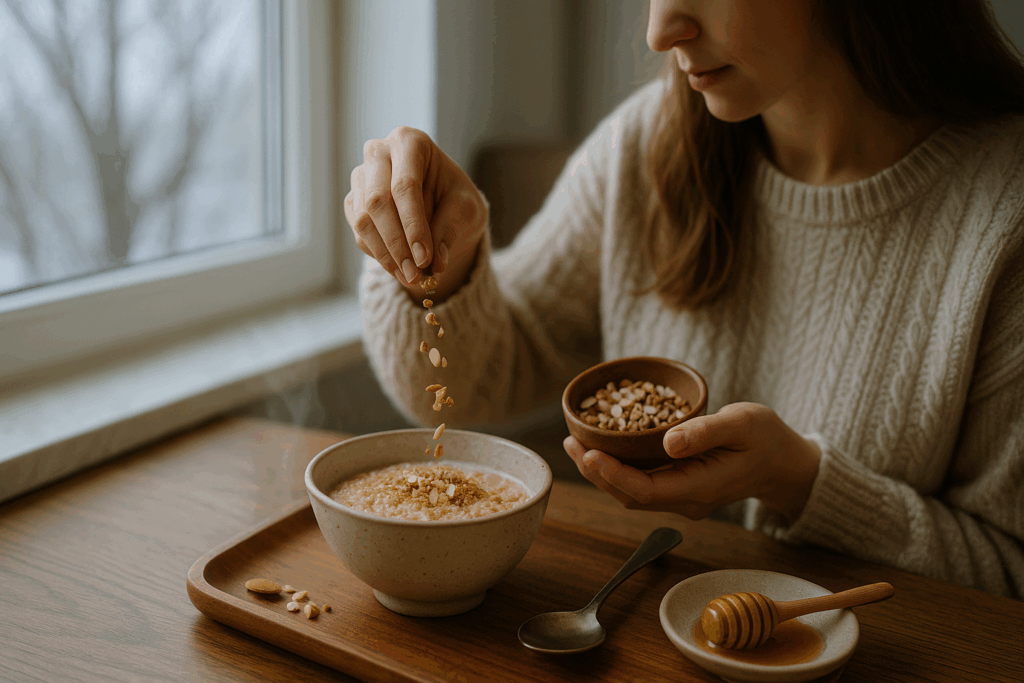
Tips for Buying and Storing Almonds
- Choose raw, organic almonds (unroasted and unsalted)
- Soak overnight for better digestion and skin benefits
- Store in an airtight jar in a cool, dark place
- Avoid overly processed or flavored almonds with sugar and oils
- Use almond powder in smoothies, porridge, or energy balls
FAQs
Q: Are almonds good for daily energy?
Yes. Almonds are rich in protein, healthy fats, and magnesium — all of which help sustain energy and reduce fatigue.
Q: Should I eat almonds raw or soaked?
Both are beneficial. Soaked almonds are easier to digest and may enhance nutrient absorption, especially for women with sensitive digestion.
Q: Can almonds help with hormonal balance?
Yes. They contain vitamin E and magnesium, which support adrenal health, reduce PMS symptoms, and balance estrogen.
Q: Are almonds good for weight loss during winter?
Yes. Almonds keep you full and reduce cravings without adding empty calories — perfect for healthy weight management in colder months.
Q: How many almonds should I eat daily?
Around 20–25 almonds a day is ideal. Stick to raw or soaked, unsalted almonds for best results.

Final Thoughts: Power Up Your Winter with Almonds
Almonds are more than just a seasonal snack — they’re a winter wellness essential. From boosting energy and metabolism to supporting hormone balance and glowing skin, they’re a smart, natural choice for any woman looking to stay healthy, vibrant, and strong throughout the colder months.
Simple, nourishing, and easy to include in your routine, almonds truly live up to their superfood status.