

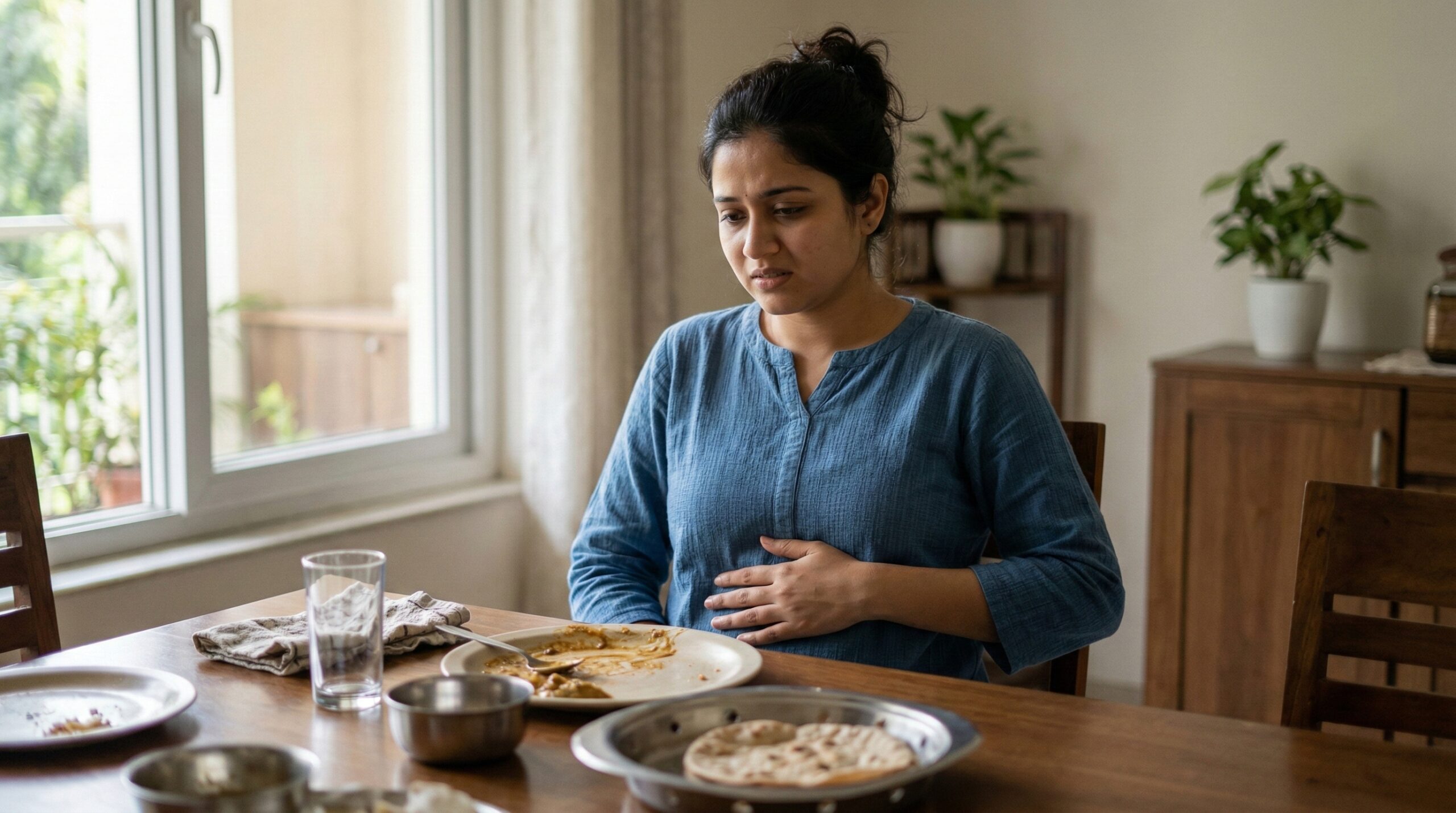

Why Does Roti Make You Feel Puffy?
You eat two rotis.
You’re not overeating. You’re not indulging in junk.
Yet within 30–60 minutes, your stomach feels tight. Heavy. Gassy.
Sound familiar?
If you experience bloating after roti, the issue may not be wheat itself.
It may be:
• The type of flour
• Low fiber balance
• Poor gut bacteria
• Fast digestion + fermentation
• Hidden inflammation triggers
Let’s break it down simply and clearly.
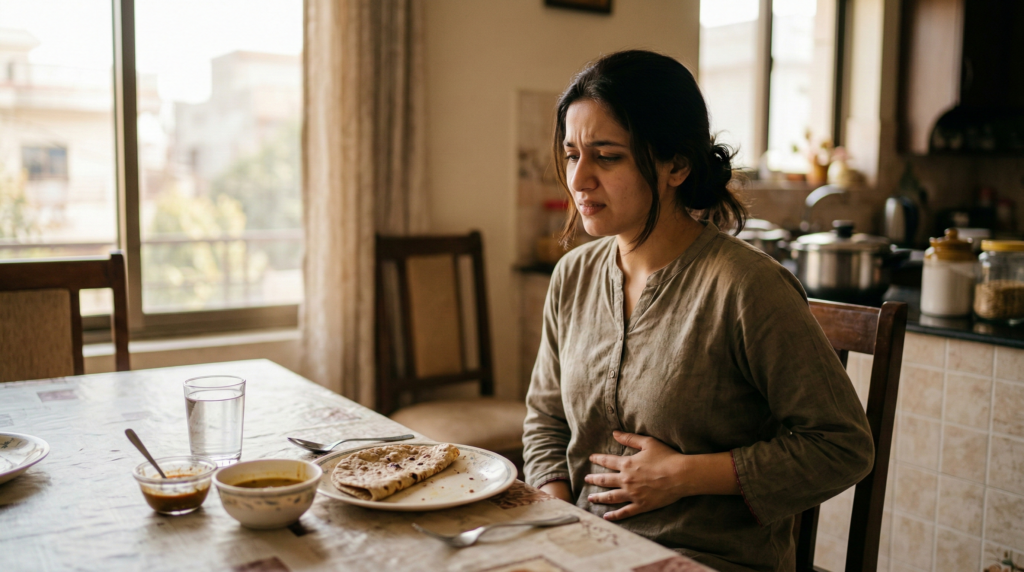
The Real Reason: It’s About Digestion Speed
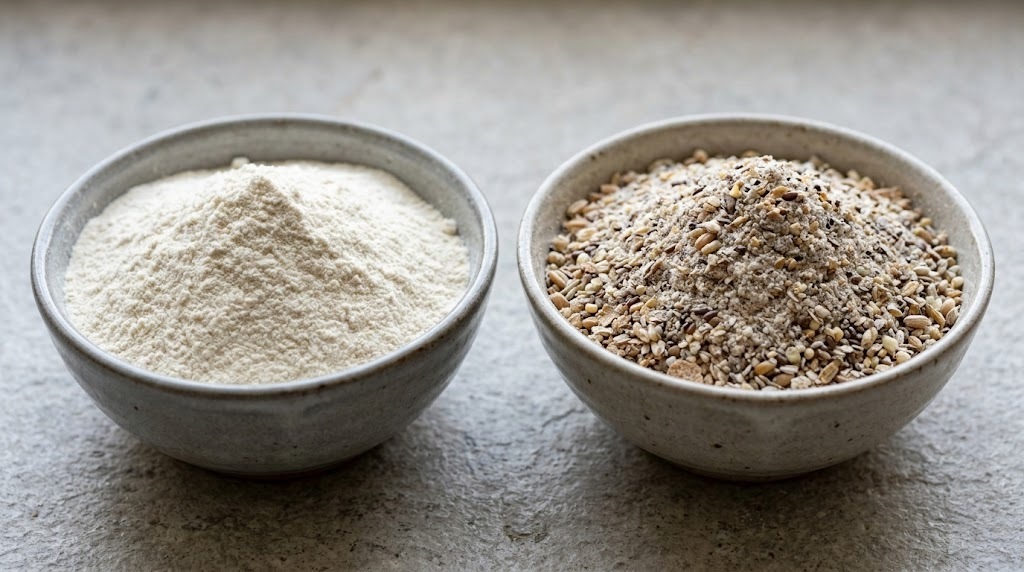
Most commercial atta today is refined or low in natural bran.
Refined flour:
- Digests quickly
- Converts rapidly to glucose
- Ferments faster in the gut
- Can increase gas production
When digestion is too fast and fiber intake is too low, gut bacteria ferment carbohydrates more aggressively — producing gas.
That leads to:
• Gas after eating atta
• Abdominal tightness
• Heavy feeling
• Burping or discomfort
This is often misinterpreted as “wheat intolerance.”
In many cases, it’s a fiber imbalance issue, not an allergy.
Research Insight: Fiber & Gut Health
Studies show dietary fiber supports beneficial gut bacteria.
When fiber intake is low:
- Gut microbiome diversity decreases
- Fermentation imbalance increases
- Inflammation markers may rise
Whole grains and soluble fiber improve digestion speed regulation and reduce bloating in healthy individuals.
Barley’s beta-glucan, for example, has been shown to support better glycemic and digestive response.
That’s why upgrading your flour matters.
Common Causes of Bloating After Roti
1. Low Fiber Diet
Most Pakistani meals are carb-heavy but fiber-poor.
Switching to Organic & Pure Multigrain Flour increases natural fiber content and improves digestion pacing.
2. Poor Gut Bacteria Balance
Low fiber diets weaken gut bacteria diversity.
Adding:
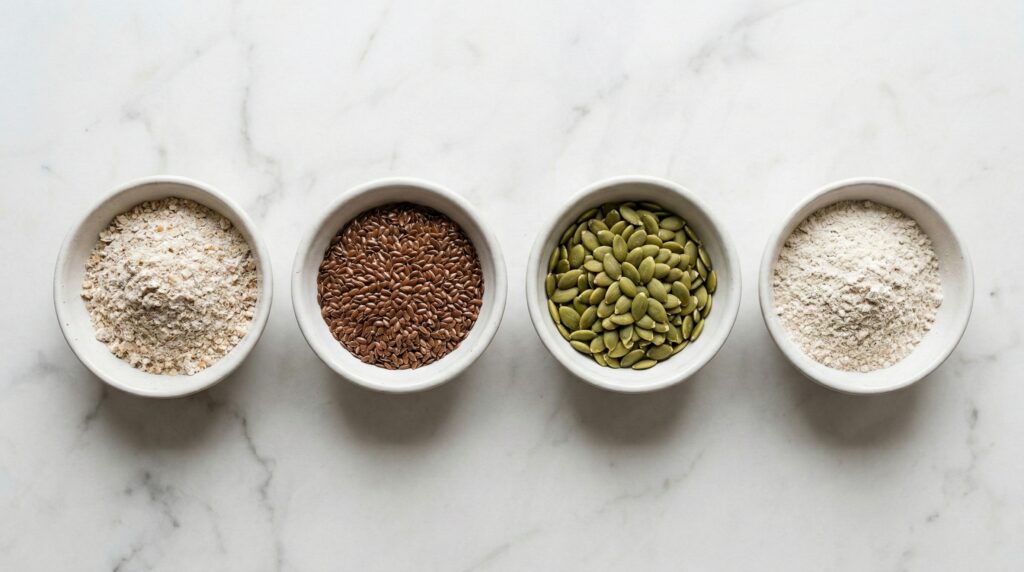
- Organic & Pure Flax Seeds (rich in soluble fiber)
- Organic & Pure Pumpkin Seeds (support mineral balance)
helps nourish beneficial bacteria.
3. Fast Glycemic Response
Refined flour spikes glucose rapidly.
That fast digestion pattern can cause fermentation discomfort.
Switching to:
- Organic & Pure Barley Flour (beta-glucan rich)
- A low GI multigrain blend
can stabilize digestion.
4. Hormonal-Related Bloating
For women, bloating may worsen before cycles.
In such cases, the Organic & Pure Seed Cycling Kit can support hormone regulation naturally.
Is It a Gluten Problem?
Many people assume bloating = gluten intolerance.
But true gluten intolerance (celiac disease) is rare and medically diagnosable.
In most cases:
It’s about processing quality, fiber deficiency, or gut imbalance — not gluten itself.
Before eliminating roti entirely, upgrade your flour first.
How To Reduce Bloating Naturally
Here’s a simple practical plan:
Morning:
- Warm water
- 1 tablespoon ground Organic & Pure Flax Seeds
Lunch:
- 1–2 rotis made with Organic & Pure Multigrain Flour
- Include vegetables + protein
Evening:
- Small handful of Organic & Pure Pumpkin Seeds
Hydration:
- 2–3 liters of water daily
Movement:
- 20-minute walk after meals
Consistency restores gut rhythm.
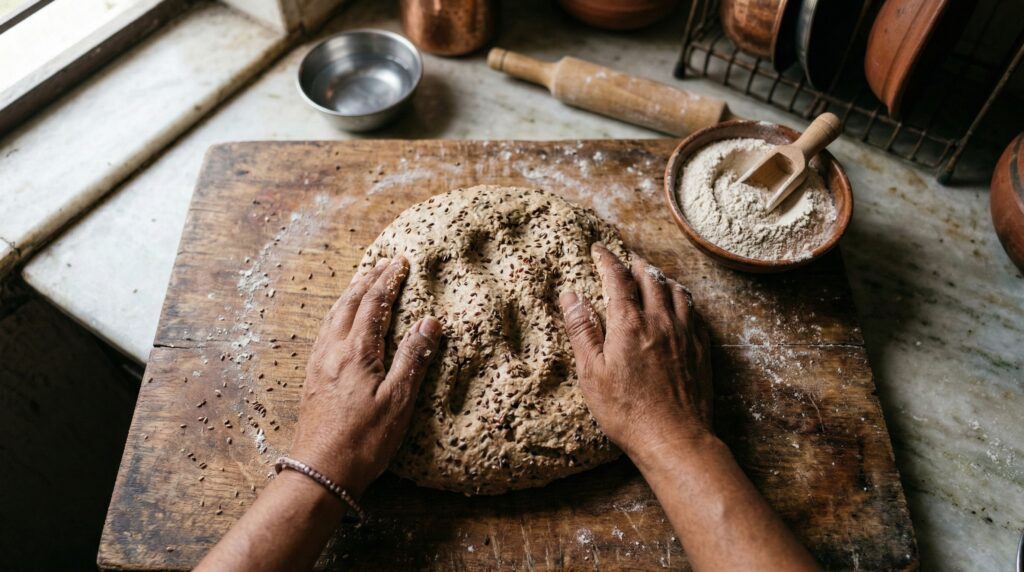
Quick & Easy Gut-Friendly Multigrain Roti
Anti-Bloat Multigrain Roti
Ingredients:
- 1 cup Organic & Pure Multigrain Flour
- 1 tablespoon ground flax seeds
- ½ teaspoon ajwain (optional for digestion)
- Warm water
Method:
- Combine flour, flax seeds, and ajwain.
- Add water gradually and knead softly.
- Rest for 10 minutes.
- Roll thin and cook on medium heat.
Ajwain improves digestion.
Flax improves fiber.
Multigrain slows fermentation.
What Changes You May Notice
Within 1–2 weeks:
• Reduced bloating
• Better bowel movements
• Less heaviness
• More stable energy
Within 3–4 weeks:
• Improved gut rhythm
• Reduced gas after eating atta
• Visible reduction in abdominal tightness
Bloating is often a digestion timing issue — not a portion issue.
Final Thoughts
If you feel bloated after roti, don’t panic.
Start with smart upgrades:
- Organic & Pure Multigrain Flour
- Organic & Pure Flax Seeds
- Organic & Pure Pumpkin Seeds
- Organic & Pure Barley Flour
- Organic & Pure Seed Cycling Kit (if hormone-related bloating exists)
You don’t need to remove roti from your life.
You need to restore gut balance.