

Why Carbohydrates Are Not the Problem
In Pakistan, roti and rice are part of daily life.
So when people try to lose weight or improve health, the first thing they often hear is:
“Stop eating carbs.”
But here’s the truth:
Carbohydrates are not the problem.
The type of carbohydrates is.
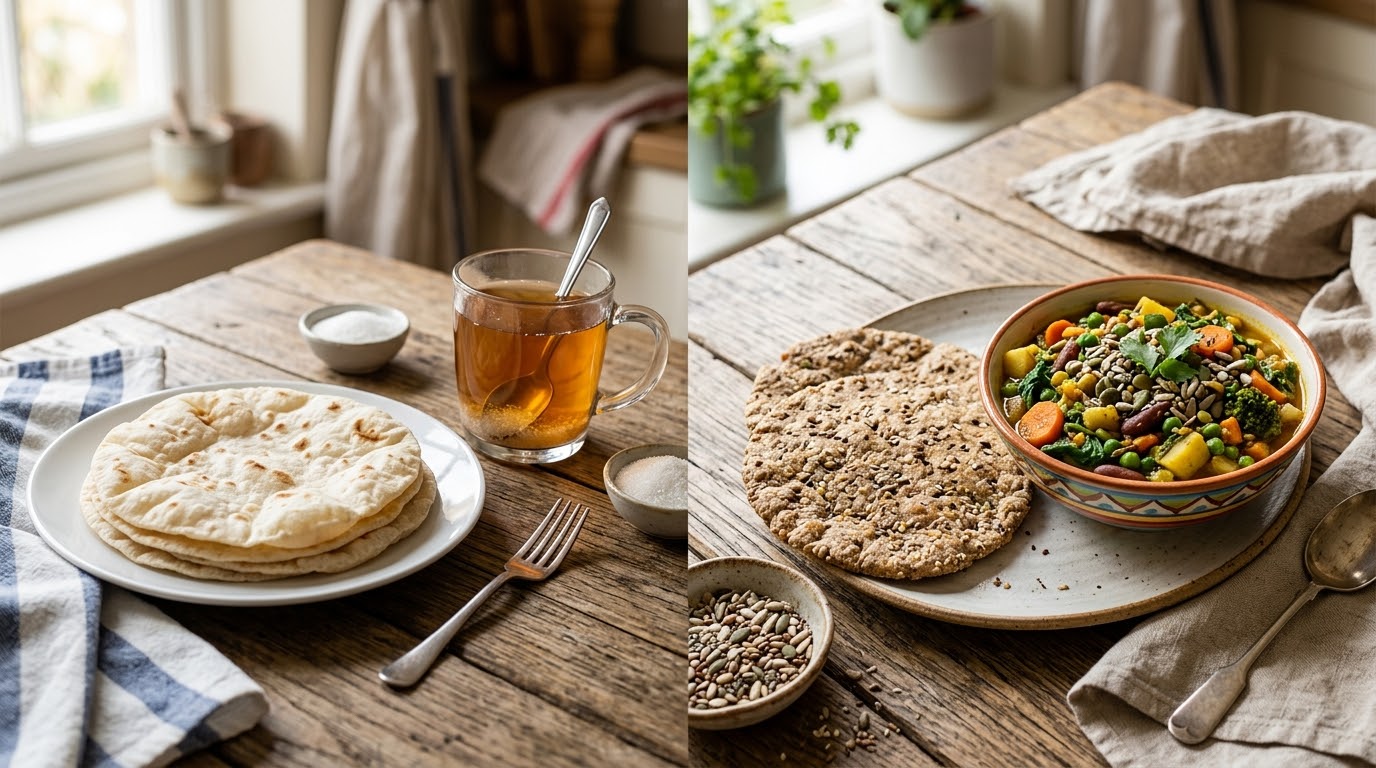
The real difference lies between:
• Fast carbs (refined, quick energy)
• Slow release carbs (steady, controlled energy)
Understanding this difference can completely change how your body handles energy, hunger, and fat storage.
What Are Fast Carbs?
Fast carbs are foods that digest quickly and raise blood sugar rapidly.
Common examples in Pakistani diets:
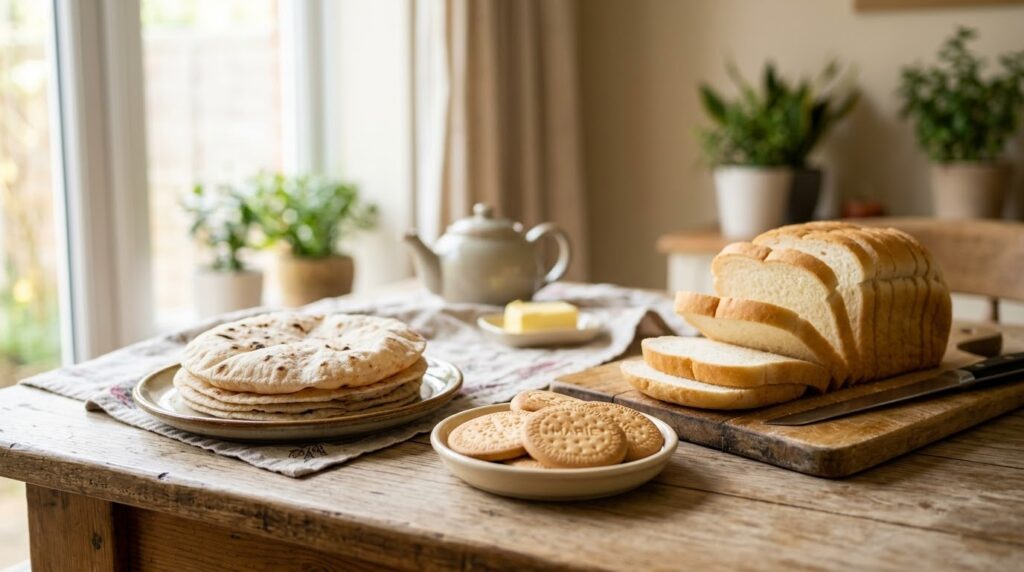
• white flour roti (refined atta)
• bakery items
• sugary tea
• white bread
• processed snacks
When you eat fast carbs:
- Blood sugar rises quickly
- Insulin spikes
- Energy drops soon after
This leads to:
• hunger soon after meals
• fat storage (especially belly)
• energy crashes
This is why many people feel tired or hungry again shortly after eating.
What Are Slow Release Carbs?
Slow release carbs digest gradually, providing steady energy over time.
These are also known as low glycemic foods.
Examples:
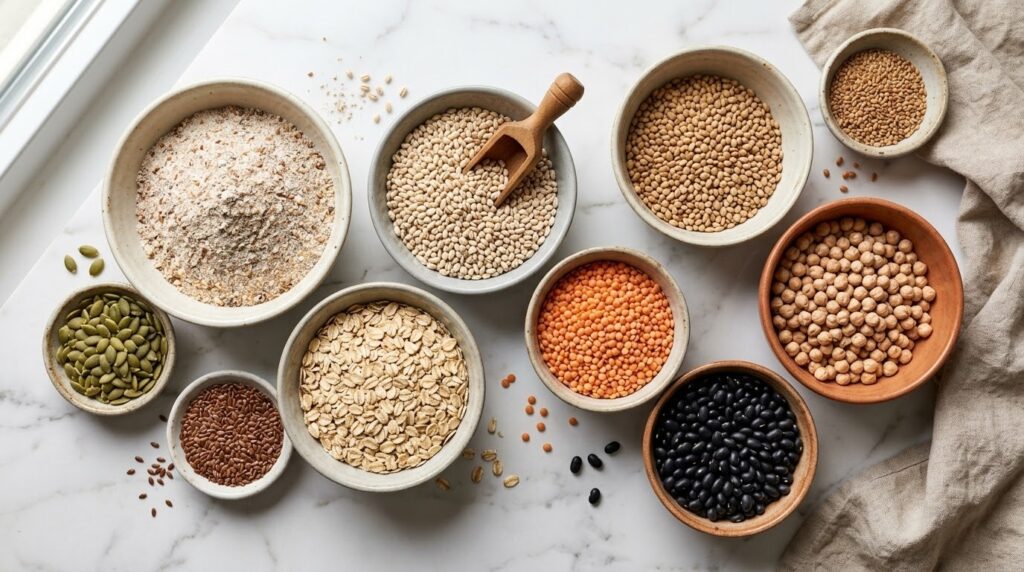
• whole grains
• multigrain flour
• barley
• oats
• legumes
• seeds
These foods:
• release glucose slowly
• reduce insulin spikes
• improve satiety
• support fat loss
This is why insulin friendly foods are important for long-term health.
Why This Matters for Pakistani Families
Most households eat roti multiple times a day.
If that roti is made from refined flour, the body experiences repeated sugar spikes.
Over time, this can contribute to:
• weight gain
• fatigue
• increased hunger
• metabolic imbalance
Simply switching the type of flour used daily can make a noticeable difference.
The Smart Swap: Upgrade Your Daily Atta
Instead of removing roti, upgrade it.
Switch to:
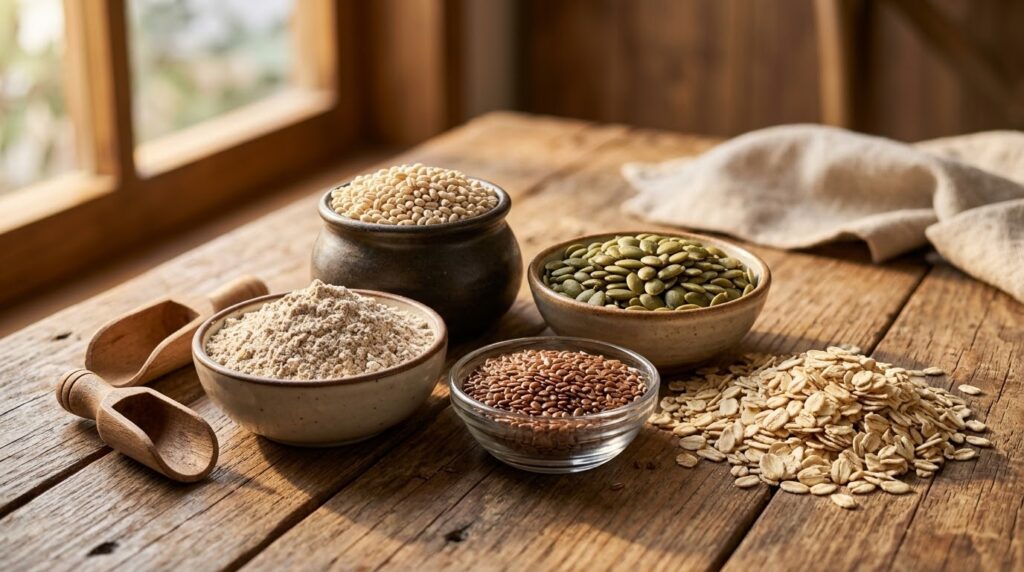
• Organic & Pure Multigrain Flour
Provides fiber + slow-release carbohydrates
• Organic & Pure Barley Flour
Contains beta-glucan for blood sugar control
• Organic & Pure Flax Seeds
Adds soluble fiber + omega-3
• Organic & Pure Pumpkin Seeds
Supports metabolism with zinc & magnesium
• Organic & Pure P.C.O.S Seeds Bundle
Supports hormone balance alongside metabolism
These upgrades turn your daily meals into low glycemic, insulin-friendly meals.
Research Insight: Glycemic Index & Fat Storage
The Glycemic Index (GI) measures how quickly food raises blood sugar.
Studies show that:
• high GI diets are linked to increased fat storage
• low GI diets improve insulin sensitivity
• whole grains reduce abdominal fat risk
This is why nutrition experts emphasize slow release carbs for sustainable weight control.
How to Build a Balanced Plate
For stable energy and fat control, your meal should include:
• slow carbs (multigrain roti)
• protein (daal, chicken, eggs)
• vegetables
• healthy fats (seeds)
This combination slows digestion and prevents sudden blood sugar spikes.
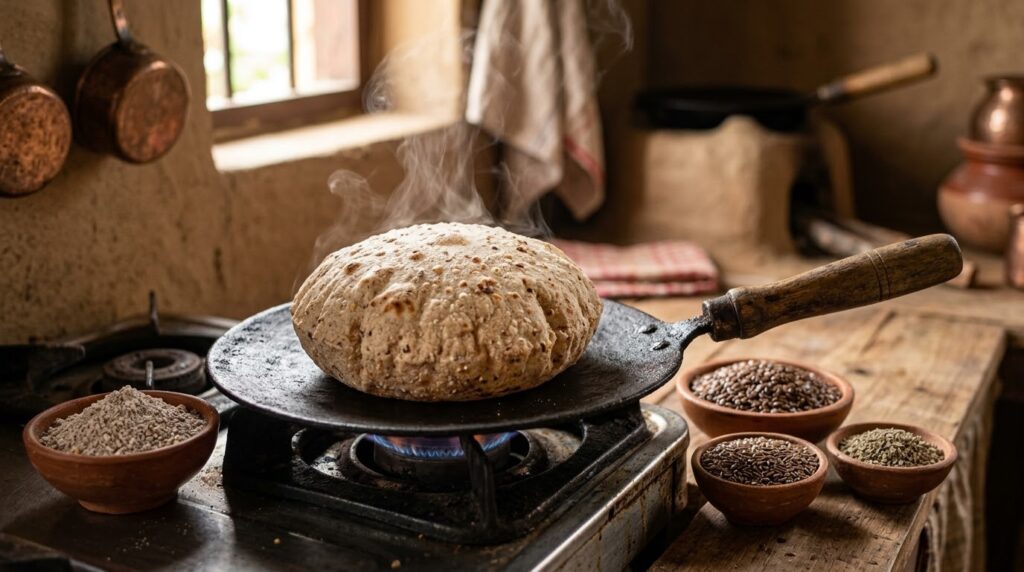
Quick Slow-Carb Multigrain Roti Recipe
Stable Energy Roti
Ingredients:
- 1 cup Organic & Pure Multigrain Flour
- 1 tablespoon ground Organic & Pure Flax Seeds
- ½ teaspoon ajwain
- Warm water
Method:
- Mix all ingredients.
- Knead soft dough.
- Rest for 10 minutes.
- Cook on medium heat.
This improves digestion and keeps energy stable for longer.
What You’ll Notice After Switching
Within 1–2 weeks:
• less hunger between meals
• reduced energy crashes
• improved digestion
Within 3–4 weeks:
• better weight control
• reduced belly fat
• more consistent energy
This is the power of choosing the right carbs — not removing them.
Final Thoughts
Carbs are not your enemy.
Unbalanced carbs are.
Instead of cutting roti out of your life, upgrade it:
- Organic & Pure Multigrain Flour
- Organic & Pure Flax Seeds
- Organic & Pure Pumpkin Seeds
- Organic & Pure Barley Flour
- Organic & Pure P.C.O.S Seeds Bundle
Your daily meals shape your metabolism.
Choose smarter carbs — and your body responds better.