


If you’re trying to lose weight in Pakistan, you’ve probably asked this:
“Should I stop eating roti?”
The real question isn’t whether you should eat roti.
It’s which type of atta you’re using every day.
Because not all flour behaves the same inside your body.
Let’s break this down properly — scientifically, practically, and culturally.

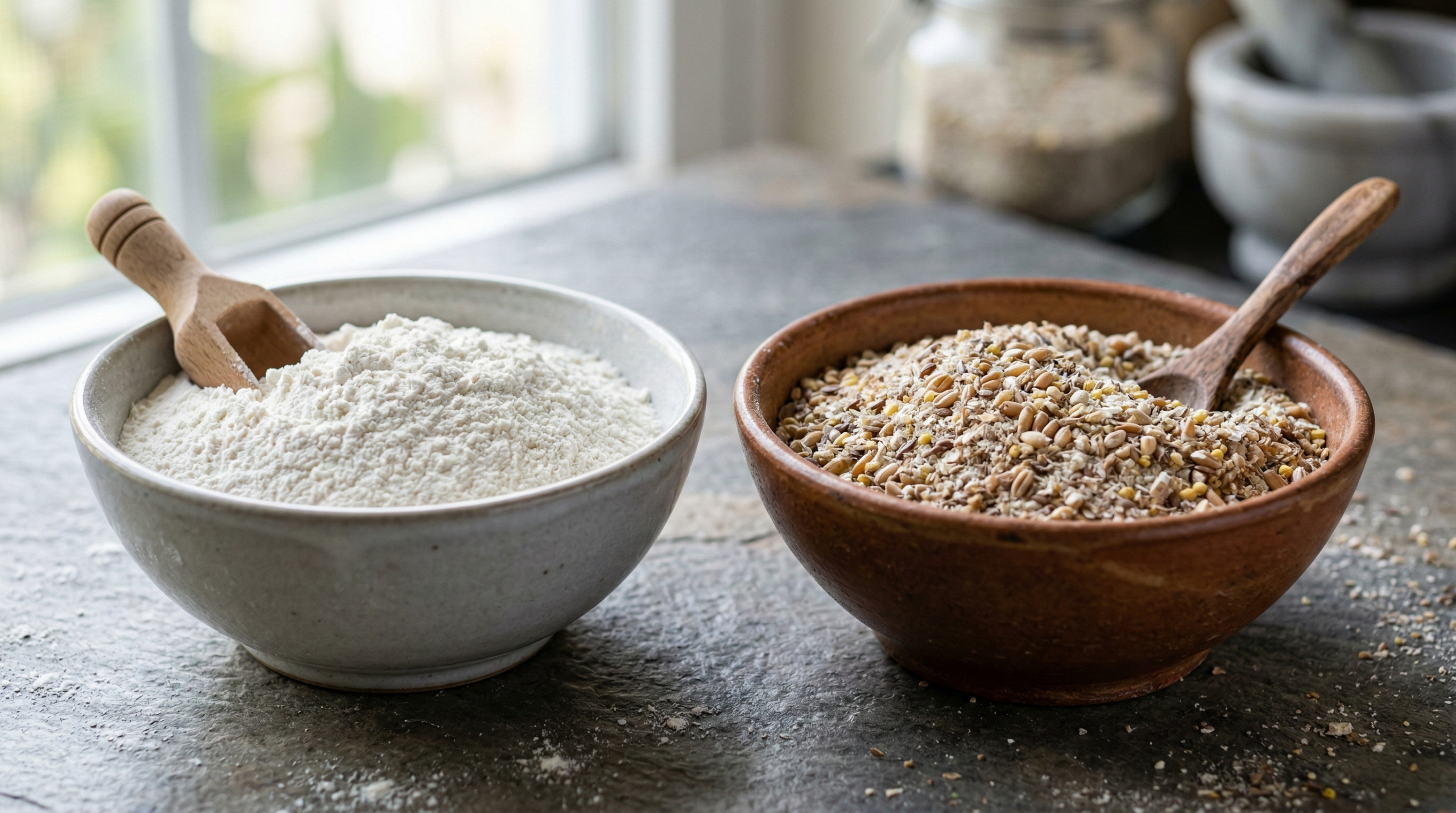
What Is Regular Atta?
Most commercial atta today is refined or partially refined wheat flour.
During industrial processing:
- Fiber-rich bran is removed
- Nutrients are reduced
- Glycemic index increases
Even when labeled “chakki atta,” the fiber content can be inconsistent depending on milling quality.
Refined flour digests quickly. That means:
- Faster glucose release
- Higher insulin spike
- Faster hunger return
This cycle makes weight loss difficult.
What Is Multigrain Flour?
True multigrain flour blends wheat with additional whole grains and seeds.
Organic & Pure Multigrain Flour contains a carefully balanced mix designed to increase:
- Fiber density
- Micronutrients
- Slow-release carbohydrates
Unlike refined flour, multigrain provides structural resistance during digestion, slowing glucose absorption.
That’s critical for fat loss.
The Glycemic Index Factor (Why It Matters)
One major difference between regular atta and multigrain flour is the Glycemic Index (GI).
Low GI foods:
- Release glucose slowly
- Improve insulin sensitivity
- Reduce fat storage signals
- Improve satiety
High GI foods:
- Spike blood sugar
- Increase insulin
- Promote abdominal fat
Studies published in The Journal of Nutrition show whole grain consumption is associated with lower body weight and reduced visceral fat compared to refined grains.
That’s why low GI atta is important if your goal is fat reduction.
Keep it clean and premium.

Fiber: The Weight Loss Multiplier
Most Pakistani diets are fiber deficient.
Fiber:
- Slows digestion
- Reduces appetite
- Improves gut microbiome
- Controls blood sugar
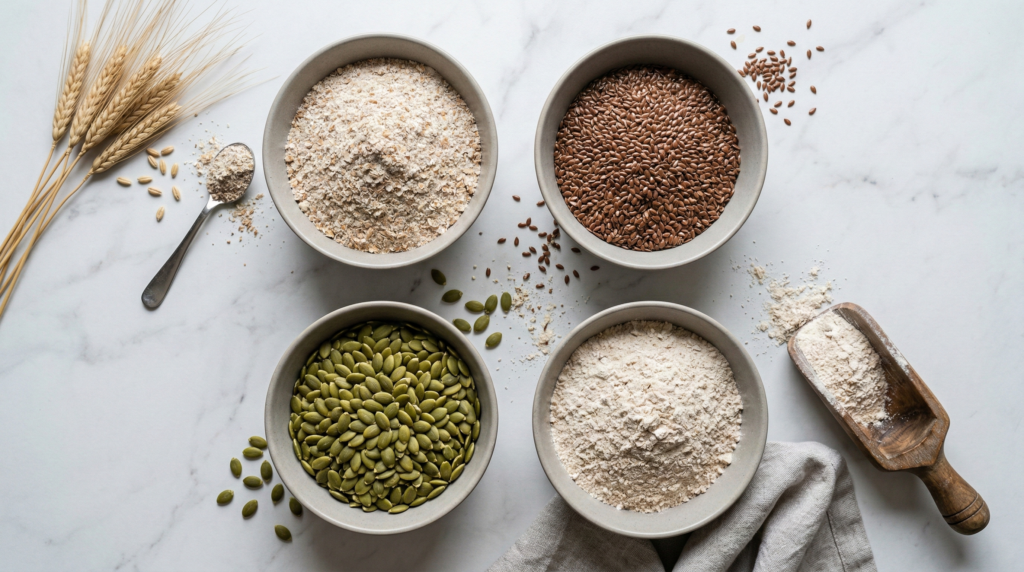
Organic & Pure Flax Seeds are rich in soluble fiber.
Adding just 1 tablespoon daily increases fiber intake significantly.
Organic Glow & Balance Seed Mix contains zinc and vitamin E that help maintain healthy-looking skin.
Organic & Pure Pumpkin Seeds provide zinc and magnesium — minerals linked with improved metabolic efficiency.
When combined with Organic & Pure Multigrain Flour, you’re not just eating roti — you’re stabilizing metabolism.
Which One Helps More With Weight Loss?
Here’s the practical comparison:
Regular Atta
- Faster digestion
- Higher blood sugar spike
- Less satiety
- Easier overeating
Multigrain Flour
- Slower glucose release
- Higher fiber
- Longer fullness
- Better metabolic stability
If your goal is sustainable weight loss, multigrain flour is the smarter long-term option.
What About Taste?
One common fear:
“Will it taste heavy?”
Properly formulated multigrain flour — like Organic & Pure Multigrain Flour — maintains softness while increasing nutritional density.
The key is balance, not overload.
Quick & Easy Weight-Loss Friendly Multigrain Roti Recipe
Soft Multigrain Fat-Loss Roti
Ingredients:
- 1 cup Organic & Pure Multigrain Flour
- 1 tablespoon ground Organic & Pure Flax Seeds
- Warm water
- Pinch of salt
Instructions:
- Mix flour and flax seeds.
- Add water gradually.
- Knead until soft.
- Rest for 10 minutes.
- Cook on medium heat until puffed.
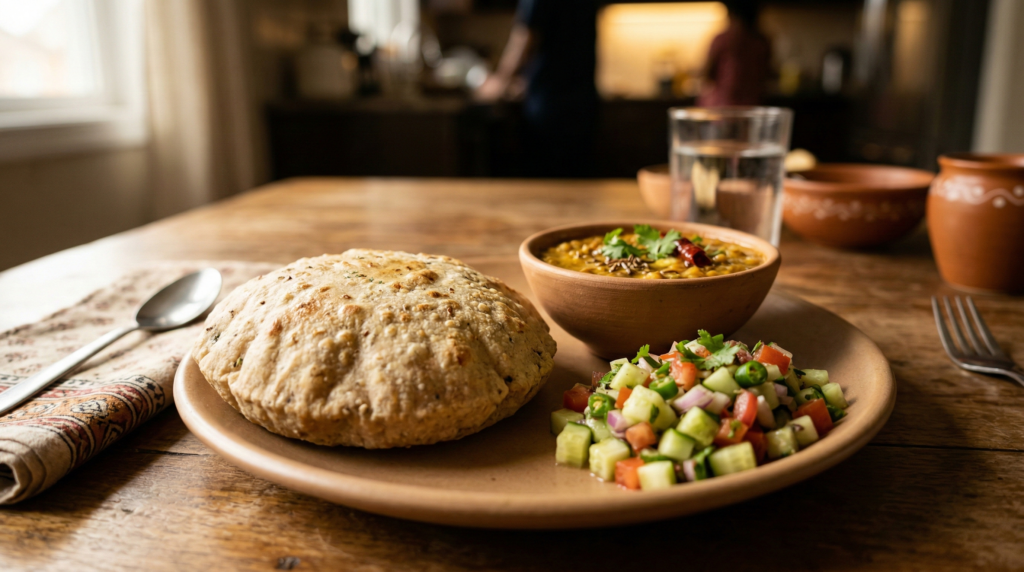
Serve with protein and vegetables for a balanced meal.
When Will You See Results?
If you switch consistently:
Week 1–2:
- Reduced bloating
- Improved digestion
Week 3–4:
- Better energy levels
- Reduced hunger spikes
Long term:
- Gradual fat reduction
- Better blood sugar stability
Weight loss isn’t about eliminating staples.
It’s about upgrading them.
Final Verdict
If you’re serious about weight loss in Pakistan, don’t remove roti from your life.
Replace refined flour with:
- Organic & Pure Multigrain Flour
- Organic & Pure Flax Seeds
- Organic & Pure Pumpkin Seeds
- Organic Glow & Balance Seed Mix
- PCOS Seeds Bundle
The difference isn’t in how much you eat.
It’s in how your body responds to what you eat.