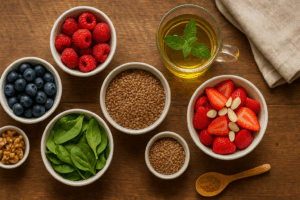



Understanding the Role of Diet in PCOS Management
For many women, Polycystic Ovary Syndrome (PCOS) feels like an unpredictable cycle of weight fluctuations, cravings, fatigue, and hormonal ups and downs. What often goes unnoticed is how deeply diet influences these symptoms.
PCOS is directly linked to insulin resistance, inflammation, and hormonal imbalance — all of which can be managed through food. The right diet can stabilize blood sugar, lower inflammation, support ovulation, and naturally reduce symptoms like acne, bloating, fatigue, and irregular cycles.
At Organic and Pure, we focus on nourishing foods such as Flax Seeds, Pumpkin Seeds, and our Glow & Balance Seed Mix, which help women rebalance their hormones through everyday meals.
Top 6 Ways Diet Helps Manage PCOS Naturally
- Stabilizes Blood Sugar: Prevents insulin spikes that worsen PCOS.
- Reduces Inflammation: Supports metabolism and hormone regulation.
- Promotes Healthy Ovulation: Nutrient-dense foods support reproductive balance.
- Improves Digestion: Fibrous foods help with hormone detox.
- Supports Weight Balance: Reduces cravings and improves metabolism.
- Balances Hormones: Omega-3s, zinc, and magnesium support progesterone and estrogen levels.
Diet isn’t just fuel — it’s a daily tool for healing PCOS from within.
How Diet Influences PCOS Symptoms
Women with PCOS often struggle with poor blood sugar control, which leads to increased androgen levels, irregular periods, and weight gain. Processed foods, sugar, and refined carbs trigger insulin spikes that worsen symptoms.
On the other hand, a diet rich in fiber, healthy fats, protein, and low-GI carbohydrates helps regulate hormones and improves overall wellbeing.
Choosing whole, clean foods like Organic and Pure Flax Seeds, Chia Seeds, and Pumpkin Seeds supports your hormones gently and consistently — creating a foundation for healing.
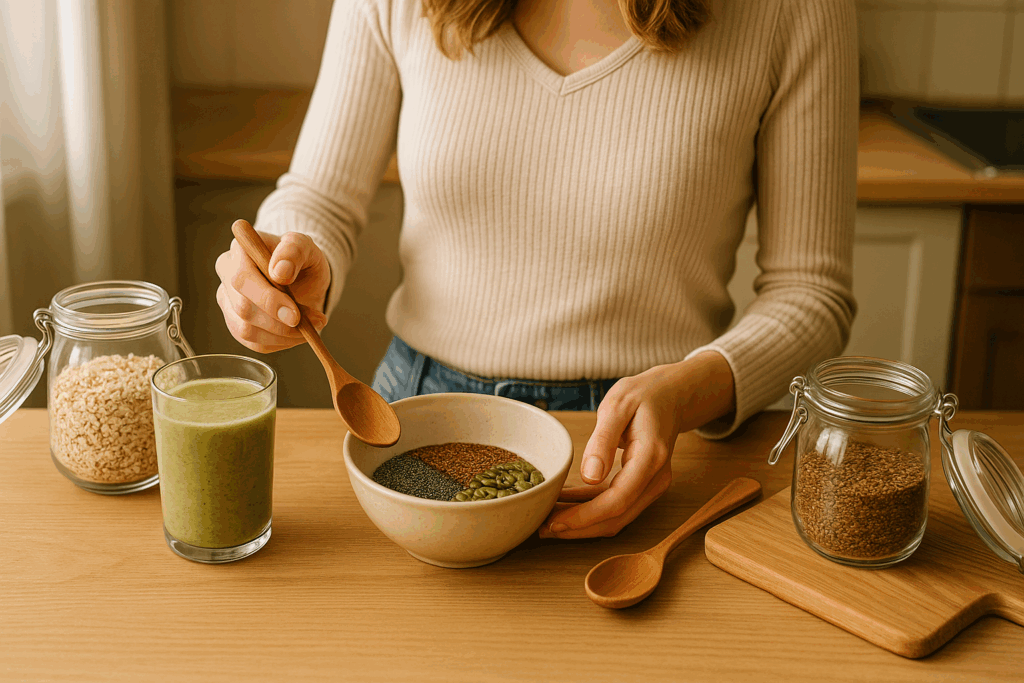
Natural Remedies to Manage PCOS Through Diet
1. Follow a Low-Glycemic (Low-GI) Diet
Low-GI foods digest slowly, keeping blood sugar stable.
- Choose: quinoa, lentils, oats, sweet potatoes, whole grains, leafy greens.
- Avoid: white bread, sugar, pastries, soda, packaged snacks.
- This reduces insulin resistance — the root cause of PCOS symptoms.
2. Add Fiber-Rich Foods for Hormone Detox
Fiber helps remove excess hormones and supports digestion.
Include:
- Flax seeds
- Chia seeds
- Leafy greens
- Apples, berries
- Lentils and vegetables
Daily Routine:
1 tbsp Organic Flax Seeds in warm water each morning supports digestion and hormone elimination.
3. Eat Enough Protein and Healthy Fats
Protein and good fats reduce cravings, support ovulation, and keep hormones balanced.
- Protein: eggs, chickpeas, tofu, fish, chicken.
- Healthy fats: avocado, olive oil, almonds, pumpkin seeds, sesame seeds.
- Healthy fats also stabilize mood and encourage progesterone production.
4. Reduce Inflammatory Foods
Inflammation worsens PCOS by raising cortisol and disrupting metabolism.
Limit:
- Fried foods
- Dairy excess
- Gluten-heavy meals
- Sugar and artificial sweeteners
- Highly processed foods
Add anti-inflammatory foods like turmeric, ginger, cinnamon, walnuts, and fatty fish.
5. Support Gut Health for Better Hormone Balance
Your gut eliminates excess estrogen and helps regulate metabolism.
- Add probiotics (yogurt, kefir, fermented vegetables).
- Eat prebiotics (garlic, onions, oats).
- Drink 2–3 liters of water daily to support detoxification.
Healthy digestion leads to more regular cycles and reduced PCOS symptoms.
6. Use Seed Cycling to Support Hormone Rhythm
Seed cycling helps regulate estrogen and progesterone naturally.
- Days 1–14: 1 tbsp flax seeds + 1 tbsp pumpkin seeds daily.
- Days 15–28: 1 tbsp sesame + 1 tbsp sunflower seeds daily.
For simplicity, use Glow & Balance Seed Mix, which provides everything in one easy blend.
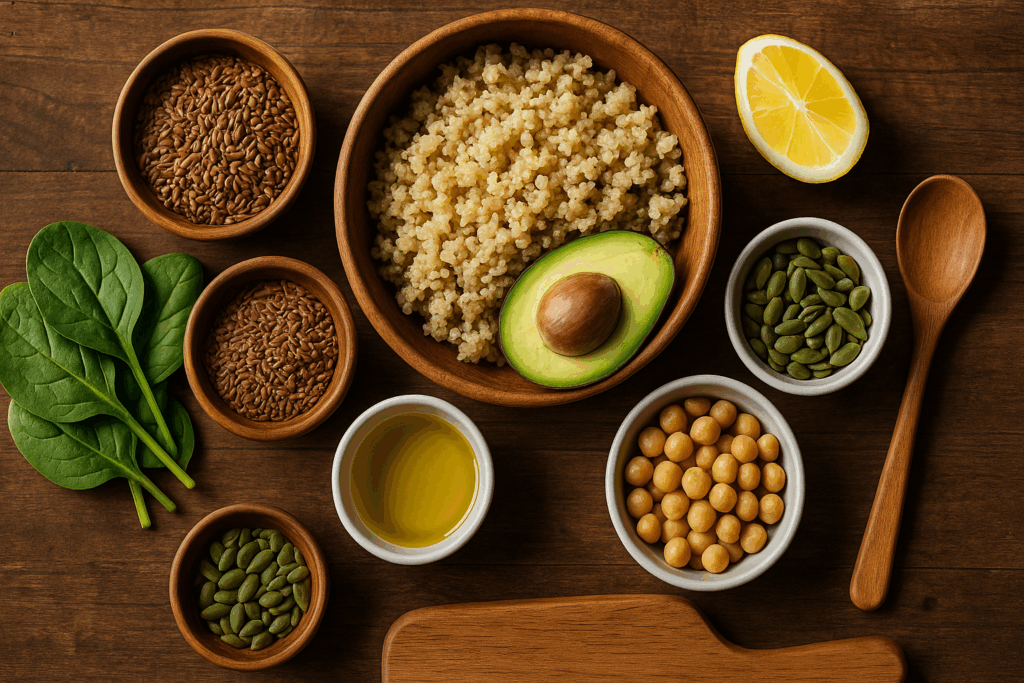
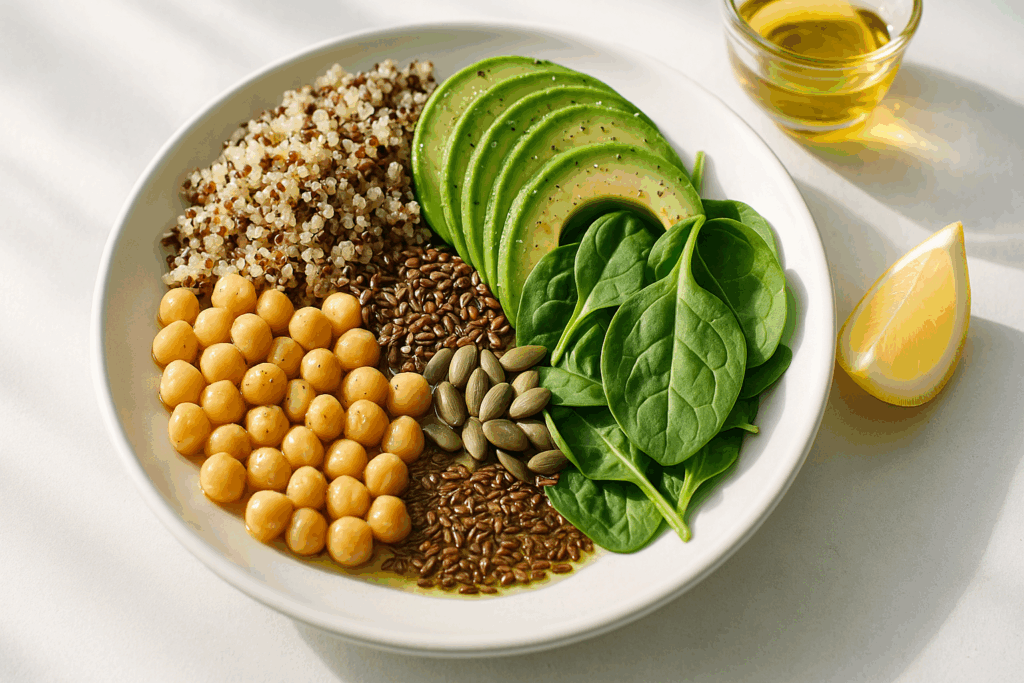
Quick & Easy Recipe: PCOS-Friendly Hormone Balance Bowl
Ingredients:
- ½ cup quinoa
- Handful of spinach
- 1 tbsp Organic Flax Seeds
- 1 tbsp Organic Pumpkin Seeds
- ½ avocado
- ½ cup chickpeas
- Lemon, olive oil, black pepper
Instructions:
Combine all ingredients in a bowl. Drizzle with lemon and olive oil.
This bowl stabilizes blood sugar, supports digestion, and nourishes hormones.
Tips for Maintaining a PCOS-Friendly Diet
- Eat every 3–4 hours to prevent insulin spikes.
- Avoid skipping meals — it raises cortisol.
- Choose whole, unprocessed foods most of the time.
- Limit caffeine and sugary drinks.
- Prioritize home-cooked meals and mindful eating.
FAQs
Q: What is the best diet for PCOS?
A low-GI, anti-inflammatory diet rich in fiber, protein, and healthy fats works best.
Q: Can diet alone regulate PCOS?
Diet significantly improves symptoms, but combining it with sleep, stress management, and movement gives best results.
Q: Are seeds good for PCOS?
Yes. Seeds like flax, pumpkin, chia, and sesame help balance hormones naturally.
Q: How long until I see results from a PCOS diet?
Most women feel improvements in energy, digestion, and cravings within 2–4 weeks.
Q: Can I eat carbohydrates with PCOS?
Yes — choose complex, low-GI carbs like oats, quinoa, brown rice, and vegetables.
Explore More Products from Organic and Pure
Support your PCOS healing journey with these essentials:
- Organic Flax Seeds – Fiber and omega-3s for hormone detox.
- Organic Pumpkin Seeds – Zinc and magnesium for metabolic balance.
- Glow & Balance Seed Mix – Daily seed cycling made simple.
- Organic Chia Seeds – Hydration and digestive support.
- Organic Honey – Natural sweetener with antioxidant benefits.
Final Thoughts: Heal Your Hormones Through Everyday Food
Managing PCOS with diet is powerful because it works from the inside out. Through consistent, nourishing eating habits, you can reduce inflammation, stabilize blood sugar, and support hormonal balance — gently and naturally.
With Organic and Pure’s nutrient-dense seeds and superfoods, creating a PCOS-friendly diet becomes effortless and enjoyable.
Food is more than fuel — it’s your daily strategy for healing, balance, and long-term wellness.