

Why Diet Is the First Step in Managing PCOS
For many women, the fastest relief from PCOS symptoms begins in the kitchen. Because PCOS is strongly tied to insulin resistance, inflammation, and hormone imbalance, a targeted PCOS diet can stabilize blood sugar, lower androgens, and support regular cycles. When combined with PCOS natural remedies like gentle herbal support and stress reduction, nutrition becomes a daily, sustainable way to manage cravings, skin flare-ups, bloating, and irregular periods — without extreme restrictions or complicated rules. This guide shows you exactly how to eat for PCOS so you can feel balanced, energized, and in control.
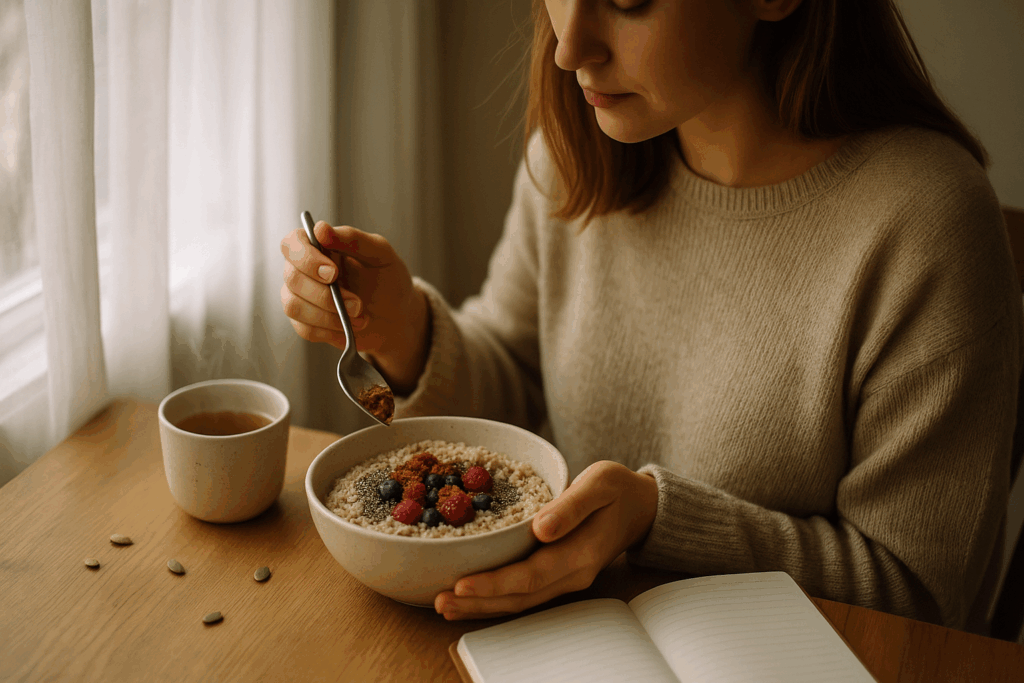
Top 6 Benefits of a PCOS-Friendly Diet
- Improves insulin sensitivity and reduces sugar crashes
- Supports ovulation and more regular menstrual cycles
- Helps lower androgens (testosterone) linked to acne and hair changes
- Eases inflammation for clearer skin and calmer digestion
- Promotes sustainable weight loss without crash dieting
- Lifts energy and mood through stable blood sugar and better sleep
Why Food Matters So Much with PCOS
In PCOS, cells often ignore insulin’s signal. The body compensates by producing more insulin, which in turn stimulates the ovaries to make more androgens. The result: stubborn weight gain, acne, irregular cycles, fatigue, and cravings. The aim of a PCOS diet is to flatten the blood sugar curve with low glycemic, high-fiber, protein-forward meals and anti-inflammatory fats. When glucose rises gently — not sharply — insulin normalizes, and hormones follow.
Core Principles of an Effective PCOS Diet
- Balance each plate: protein + fiber-rich carbs + colorful veggies + healthy fats.
- Go low glycemic: favor slow-burn carbs (oats, quinoa, legumes, sweet potato, berries).
- Front-load protein: 25–35 g at breakfast helps curb all-day cravings.
- Eat fiber first: veggies/salad before starch helps blunt glucose spikes.
- Choose anti-inflammatory fats: extra-virgin olive oil, avocado, nuts, seeds, omega-3s.
- Mind the oils: limit refined seed oils; choose cold-pressed options.
- Hydrate smartly: water, herbal teas (spearmint, cinnamon, ginger), mineral-rich broths.
- Consistent timing: 3 balanced meals + 1 protein snack (if needed) — no extreme fasting.
PCOS Plate Blueprint (Use at Every Meal)
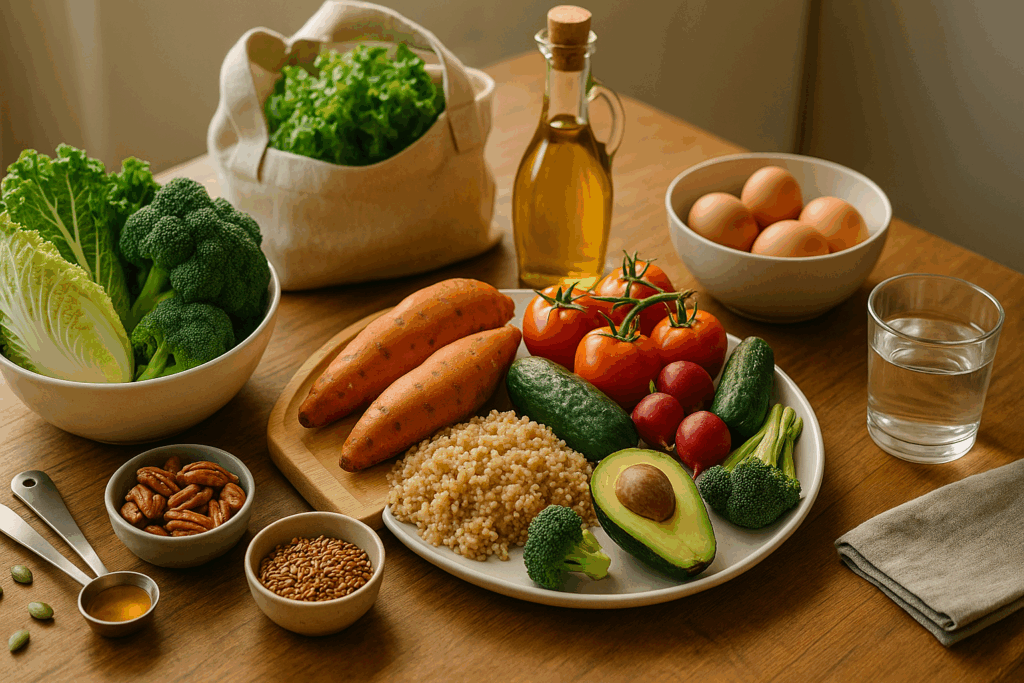
- ½ plate non-starchy vegetables: spinach, broccoli, peppers, cucumber, cabbage.
- ¼ plate protein: eggs, chicken, fish, tofu, paneer, lentils, Greek yogurt.
- ¼ plate smart carbs: quinoa, brown rice, millet, sweet potato, beans.
- Add healthy fats: 1–2 tsp olive oil/ghee, ¼ avocado, or a small handful of nuts/seeds.
- Flavor with spices: turmeric, cinnamon, cumin, fenugreek, black pepper.
Breakfast Ideas (Low GI & High Protein)
- Protein oats with chia, cinnamon, berries, and a scoop of protein (whey/plant).
- Veggie omelet + small sweet potato + avocado.
- Greek yogurt bowl with flax, walnuts, and pomegranate arils.
- Tofu bhurji with sautéed spinach + 1 millet chapati.
Lunch & Dinner Ideas (Simple, Satisfying, Balanced)
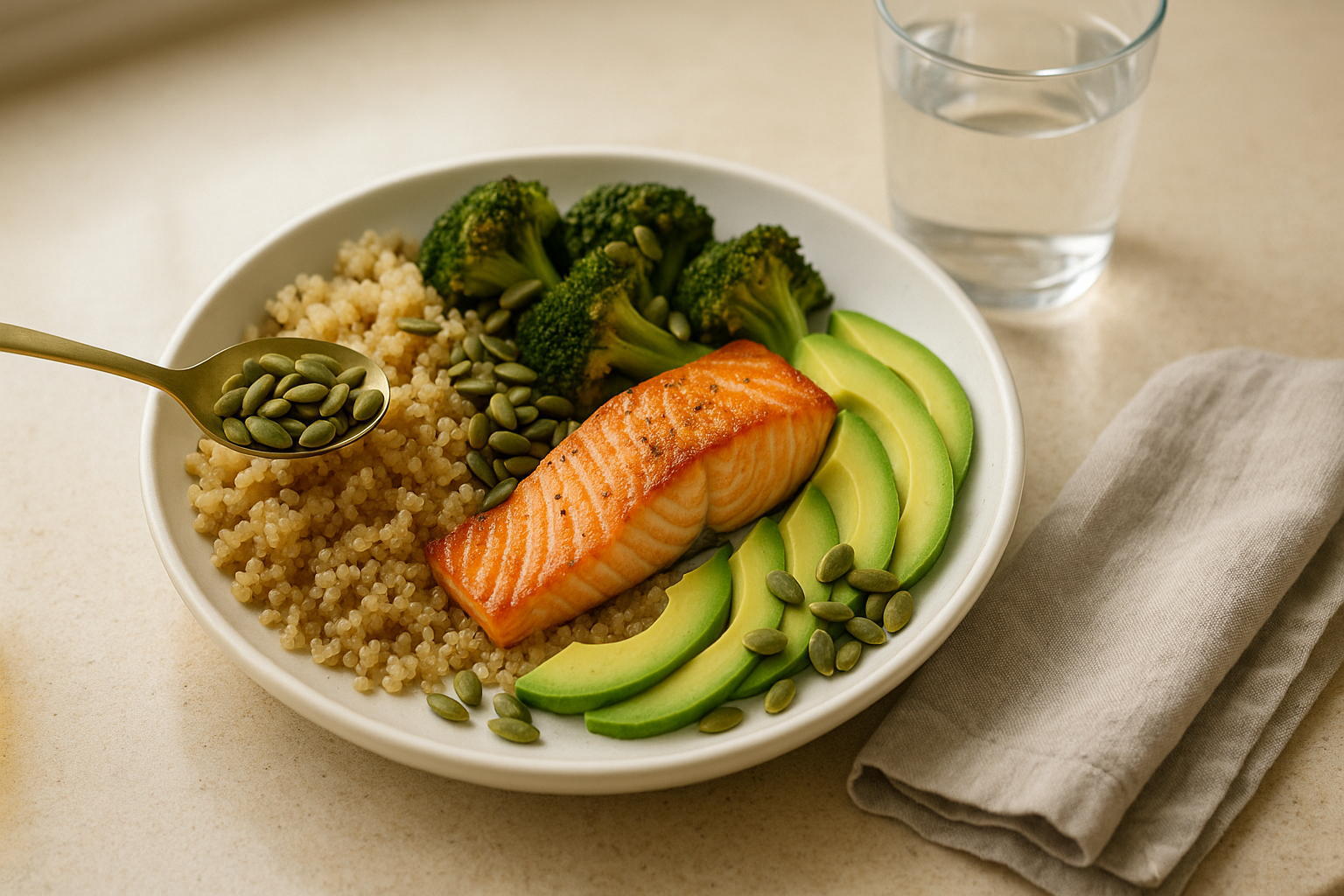
- Grilled salmon or paneer bowl: quinoa, roasted broccoli, olive oil, lemon.
- Chicken/lentil stew with carrots, tomatoes, and herbs + side salad.
- Chickpea “power plate”: chickpeas, cucumbers, tomatoes, parsley, tahini-lemon dressing.
- Stir-fried tofu and mixed veg over cauliflower rice; finish with toasted sesame.
Snack Ideas That Don’t Spike Insulin
- Handful of walnuts or almonds + green tea.
- Hummus with cucumber/carrot sticks.
- Cottage cheese or Greek yogurt with cinnamon and chia.
- 1 apple with peanut or almond butter.
Seed Cycling & Smart Add-Ons (Gentle PCOS Natural Remedies)
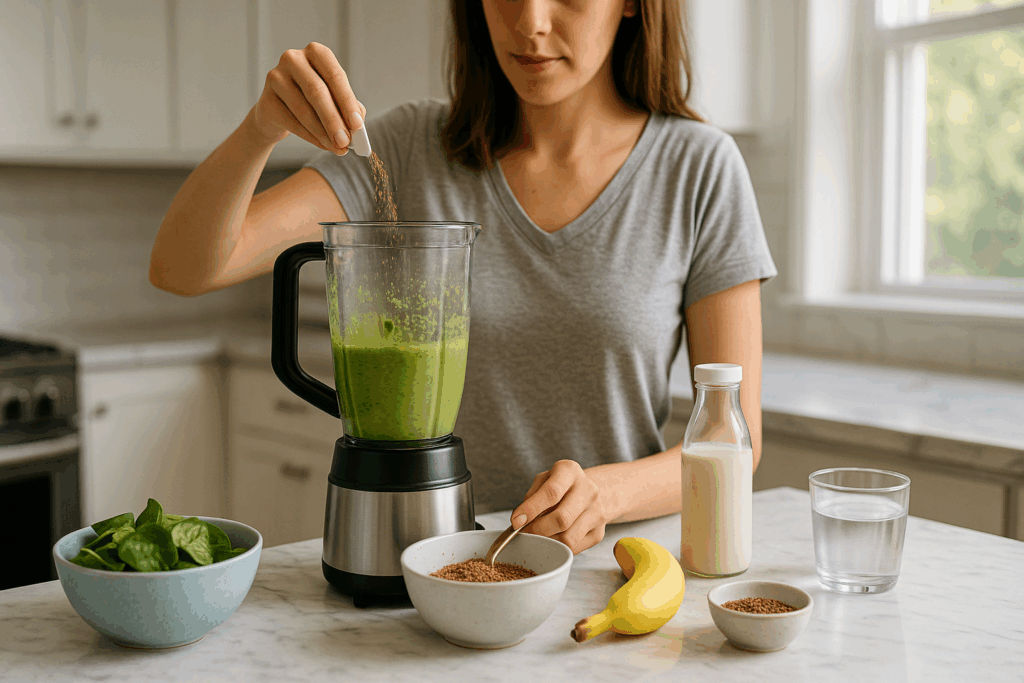
- Follicular phase (Day 1–14): 1 tbsp ground flax + 1 tbsp pumpkin seeds daily.
- Luteal phase (Day 15–28): 1 tbsp sesame + 1 tbsp sunflower seeds daily.
- Cinnamon: ½–1 tsp/day in coffee/oats may support glucose control.
- Spearmint tea: 1–2 cups/day can help reduce androgen symptoms.
- Omega-3s: fatty fish 2–3x/week or algae/fish oil supplement (consult provider).
Always discuss supplements with a healthcare professional, especially if you take medications or are trying to conceive.
What to Limit (Without Being Extreme)
- Refined carbs and sugars: white bread, pastries, sweet drinks.
- Ultra-processed snacks: chips, candy bars, instant noodles.
- Excess dairy if acne-prone (trial 4 weeks dairy-light to assess).
- Alcohol on weeknights (disrupts sleep/blood sugar).
- High-caffeine late in the day (can elevate cortisol, disrupt cycles).
Daily Use: How to Build a PCOS Routine That Sticks
Morning
- Hydrate (water + pinch of salt/lime if desired).
- Protein-first breakfast within 1–2 hours of waking.
- 10–20 minutes of light movement (walk, mobility, yoga).
Midday
- Balanced lunch; eat vegetables first, protein second, carbs last.
- 10-minute post-meal walk to improve insulin sensitivity.
Evening
- Anti-inflammatory dinner with extra veggies and olive oil.
- Herbal tea (spearmint, tulsi, chamomile).
- Screens off 60 minutes before bed; aim for 7–9 hours sleep.
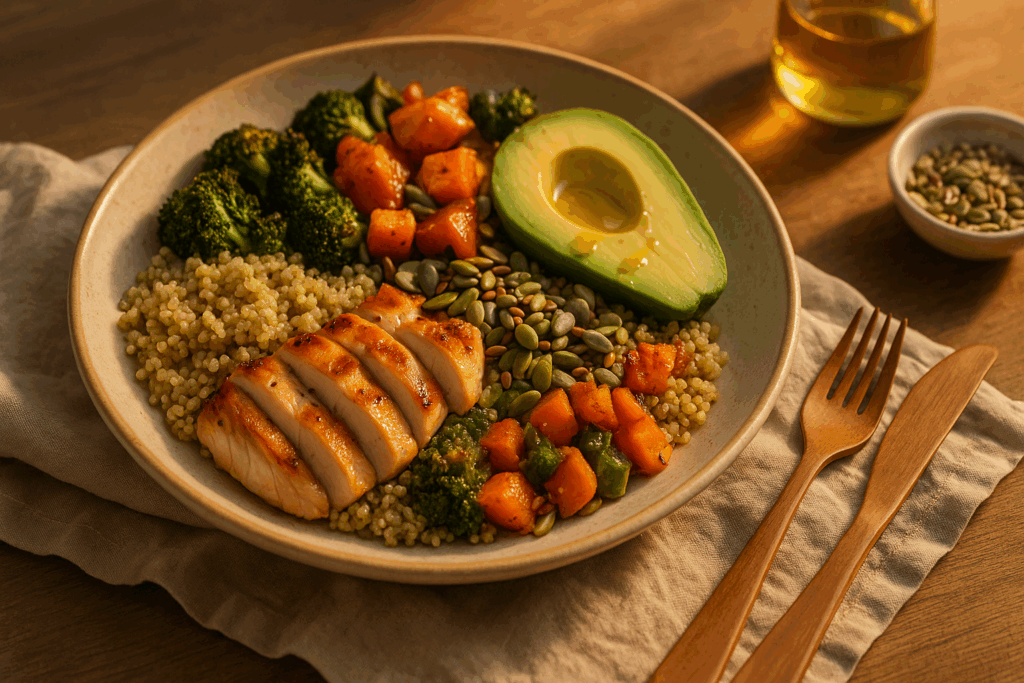
Quick & Easy Recipe: PCOS Hormone-Balancing Bowl
Ingredients:
- ½ cup cooked quinoa
- ¾ cup roasted veggies (broccoli, peppers, zucchini)
- 100–120 g grilled chicken, salmon, tofu, or paneer
- ½ avocado (sliced)
- 1 tbsp seed mix (flax + pumpkin or sesame + sunflower, per cycle phase)
- Dressing: 1 tbsp extra-virgin olive oil + lemon juice, pinch of sea salt & black pepper
Instructions:
Layer quinoa, veggies, and protein in a bowl. Add avocado and seed mix. Drizzle with dressing. Eat slowly, veggies first. This plate balances protein, fiber, and healthy fats to stabilize blood sugar and support hormones.
Tips for Grocery Shopping & Meal Prep
- Shop the outer aisles first: produce, eggs, fish, meat, yogurt.
- Buy pre-cut veggies or frozen mixes to save time.
- Cook protein in bulk twice weekly; freeze portions.
- Make a 2-minute dressing (olive oil, lemon, mustard, salt/pepper) to elevate any bowl.
- Keep a PCOS snack kit (nuts, seeds, jerky/roasted chickpeas, dark chocolate 70%+).
Lifestyle Habits That Amplify Diet Results
- Strength train 2–3x/week (improves insulin sensitivity fast).
- Walk 7–10k steps/day — especially after meals.
- Manage stress: 5–10 minutes/day of breathwork or journaling lowers cortisol.
- Prioritize sleep: poor sleep = higher cravings, higher insulin.
- Track gently: use cycle/food notes to spot patterns (no obsession).
FAQs
Q: Can a PCOS diet regulate periods?
Yes. Stabilizing blood sugar and lowering inflammation often restores ovulation and more regular cycles over time.
Q: Do I need to cut carbs completely?
No. Choose slow-digesting, high-fiber carbs in moderate portions and pair with protein/fats.
Q: Is intermittent fasting good for PCOS?
Gentle overnight fasts (12–14 hours) can help some women. Avoid long or aggressive fasts, which may raise cortisol.
Q: How long until I see changes?
Energy and cravings often improve in 2–3 weeks; cycle regularity, skin, and weight typically shift within 8–12 weeks of consistency.
Q: Are dairy and gluten off-limits?
Not necessarily. Trial a 4-week reduction if you have acne, bloating, or fatigue, then reintroduce and assess symptoms.
Final Thoughts: Nourish to Rebalance
Food is the most reliable, daily lever you can pull for PCOS. A calm, consistent PCOS diet — built on protein, fiber, colorful plants, and healthy fats — re-educates insulin, quiets inflammation, and lets your hormones settle into rhythm. Skip extremes; embrace balance. Small, repeatable meals and rituals do more for your cycles, skin, and mood than any quick fix. Choose one change today, then keep stacking wins — your body will respond.