

Understanding the Power of Managing PCOS for Fertility and Reproductive Health
PCOS and fertility are often spoken about with fear, confusion, and extremes. Many women are told they will never conceive naturally, while others are told to “just relax.” Both approaches ignore how the female body actually works.
The truth is this: PCOS does not mean infertility — it means the body is out of hormonal and metabolic rhythm.
Fertility depends on timing, balance, and communication between hormones. In PCOS, this communication is disrupted by insulin resistance, inflammation, stress hormones, and irregular ovulation. When the body senses internal instability, it delays reproduction as a protective response.
For women struggling with irregular cycles, delayed ovulation, poor egg quality, or repeated disappointment, the goal is not force — it is restoring rhythm.
With consistent nutrition, mineral support, blood sugar control, and nervous system calm, many women with PCOS see fertility improve naturally over time.
Top 6 Benefits of Managing PCOS Naturally for Fertility
- Improves Ovulation Regularity
- Stabilizing insulin and hormones supports predictable ovulation.
- Supports Egg Quality
- Reduced inflammation and better nutrient delivery improve egg development.
- Balances Insulin and Androgens
- Lower insulin reduces excess androgen production that blocks ovulation.
- Improves Uterine and Hormonal Environment
- Better progesterone support aids implantation.
- Reduces Stress-Related Fertility Blocks
- Nervous system calm supports reproductive signaling.
- Creates Sustainable Fertility Without Extreme Measures
- Supports long-term reproductive health, not just short-term outcomes.
PCOS fertility improves when the body feels safe, nourished, and stable.
Why PCOS Disrupts Fertility in Women
PCOS is not just a reproductive condition. It is a metabolic–hormonal condition that affects the entire body.
Many women with PCOS experience:
- insulin resistance
- irregular ovulation
- chronic low-grade inflammation
- elevated stress hormones
- disrupted estrogen–progesterone balance
High insulin pushes the ovaries to produce excess androgens, which interferes with ovulation. Inflammation affects egg quality. Stress hormones disrupt cycle timing and implantation.
This is why fertility does not improve through willpower alone. It improves when the internal environment becomes supportive.
Foods, minerals, sleep, and routine play a larger role than most women are told.
Nutritional Foundation Needed for PCOS Fertility
Before supplements and treatments, the body needs consistent nourishment.
Key fertility-support nutrients include:
- fiber for insulin control and hormone clearance
- omega-3 fats for egg quality and inflammation reduction
- magnesium for blood sugar and stress regulation
- zinc for ovulation and hormone signaling
- protein for hormone production and metabolic stability
This is why whole foods — seeds, nuts, yogurt, eggs, legumes, vegetables, and simple traditional meals — form the backbone of PCOS fertility nutrition.
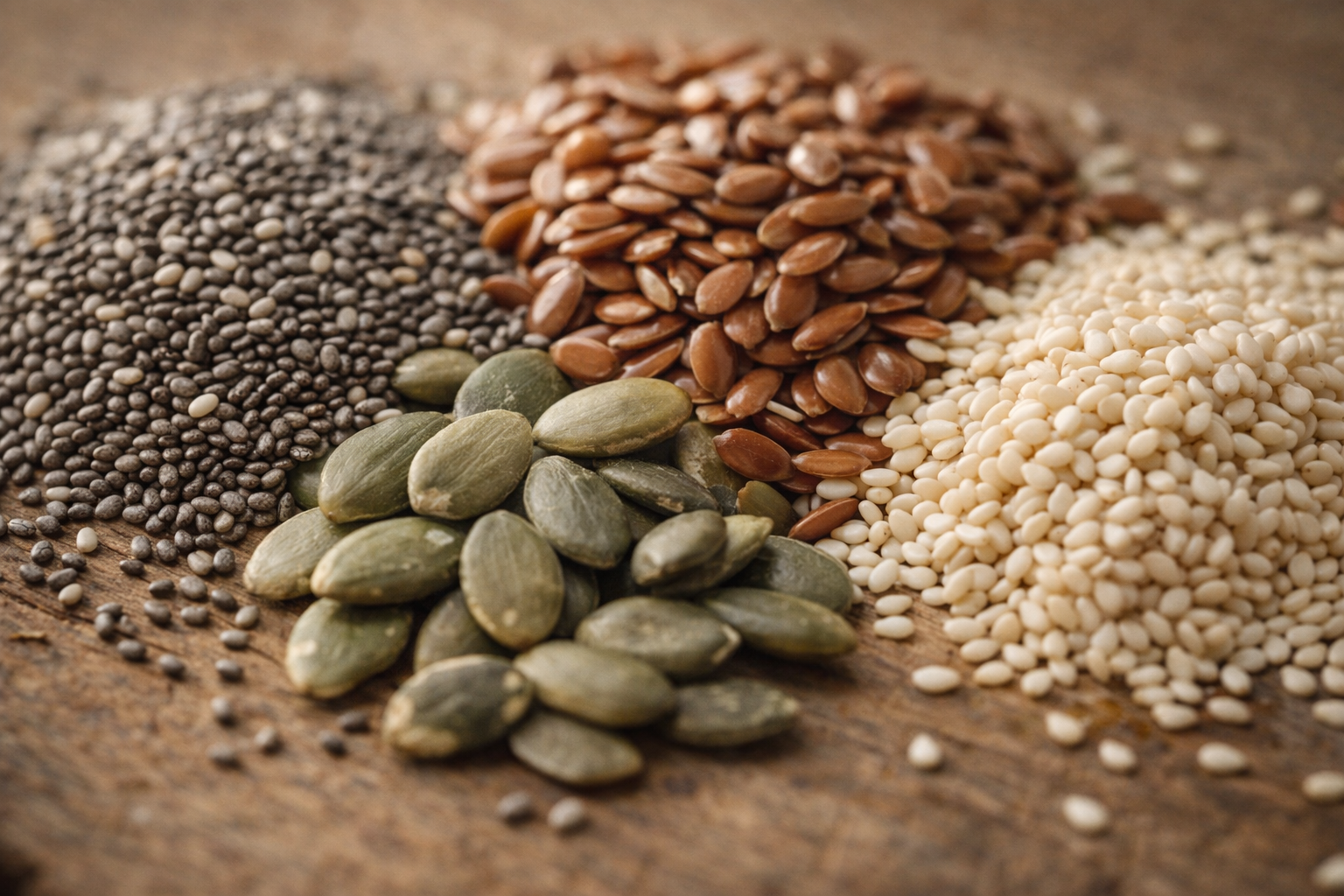
Using Organic Chia Seeds, Organic Flax Seeds, Organic Pumpkin Seeds, and Organic Sesame Seeds daily provides these nutrients in food-based, bioavailable form.
How Nutrition and Routine Directly Improve Fertility in PCOS
Blood sugar stability restores ovulation
When blood sugar spikes reduce, insulin levels fall. This allows ovarian hormones to rebalance, making ovulation more regular.
Reduced inflammation improves egg quality
Eggs take time to develop. Lower inflammation today improves egg quality months later.
Better digestion improves hormone clearance
A healthy gut clears excess hormones efficiently, improving cycle regularity.
Nervous system calm supports reproductive signaling
Chronic stress suppresses fertility. Calm routines restore the hypothalamic–pituitary–ovarian axis.
This is biology — not motivation.

Natural Remedies to Manage PCOS for Fertility (Daily, Practical Use)
1. Morning Blood Sugar Stabilization for Ovulation
A foundational habit.
How to Use:
Start the day with protein + fiber.
Add 1 tablespoon Organic Chia Seeds or Organic Flax Seeds to yogurt or warm water.
Benefits:
Improves insulin control and supports ovulation timing.
2. Seed-Based Hormonal Support for Cycle Rhythm
How to Use:
Add Organic Pumpkin Seeds and Organic Sesame Seeds through the week to meals or snacks.
Benefits:
Provides zinc, magnesium, and healthy fats that support estrogen and progesterone balance.
3. PCOS Fertility Snack to Prevent Cravings and Stress
How to Use:
Snack on yogurt with seeds or Glow & Balance Seed Mix instead of sugary foods.
Benefits:
Reduces insulin spikes that disrupt ovulation.
4. Post-Meal Movement for Fertility Support
How to Use:
Walk 15–20 minutes after lunch or dinner.
Benefits:
Improves insulin sensitivity more effectively than many supplements.
5. Evening Nervous System Recovery for Implantation Support
How to Use:
Eat a balanced dinner. Avoid late-night eating.
Pair with warm milk or herbal tea.
Benefits:
Reduces cortisol, improves sleep, supports hormonal rhythm.
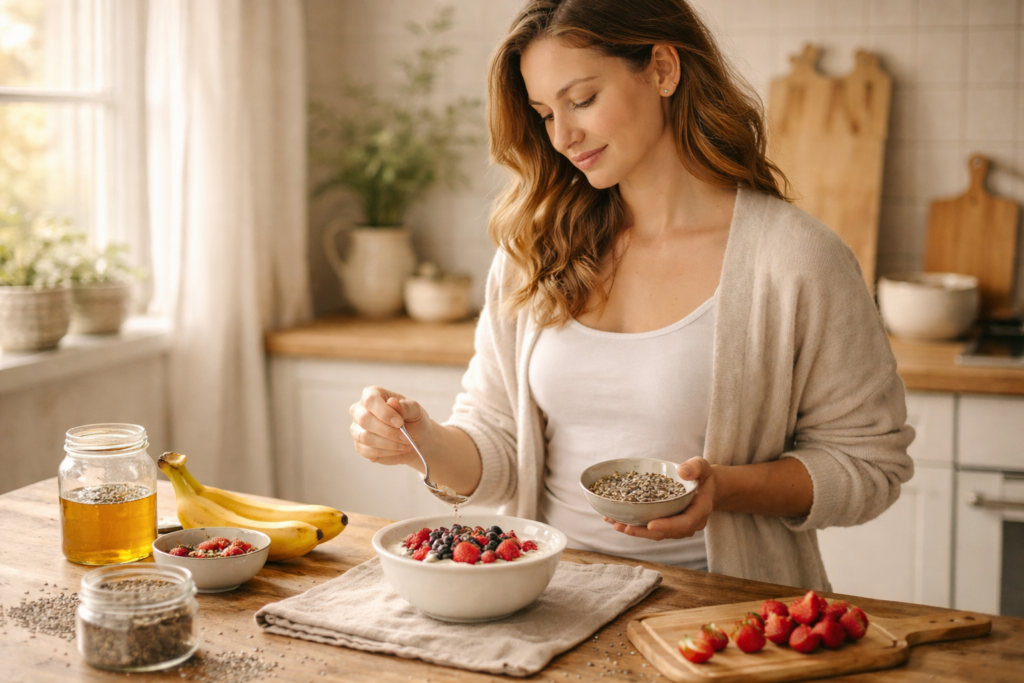
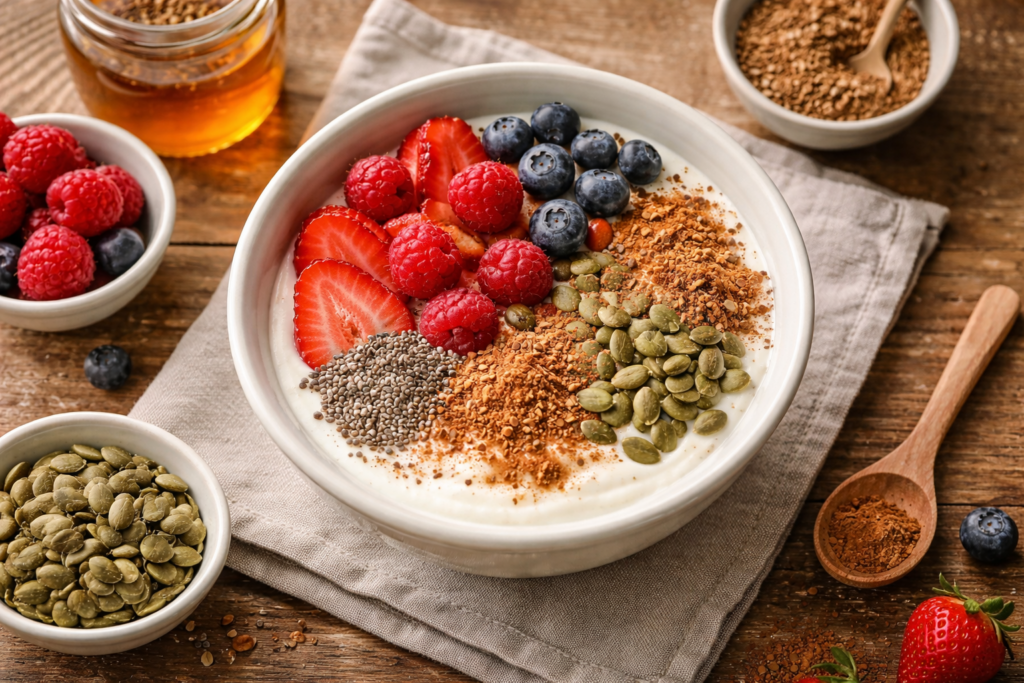
Quick & Easy Recipe: PCOS Fertility Yogurt Bowl
Ingredients:
1 bowl plain Greek yogurt
1 tbsp Organic Chia Seeds
1 tbsp ground Organic Flax Seeds
1 tbsp Organic Pumpkin Seeds
Pinch of cinnamon
Few berries or chopped apple
Instructions:
Mix and eat as breakfast or afternoon meal.
This bowl supports insulin control, egg quality, and hormonal balance without stress.
Tips for Improving Fertility with PCOS (What Actually Matters)
- Focus on metabolic stability, not weight obsession
- Avoid extreme dieting — it raises cortisol
- Pair all carbohydrates with protein and fat
- Be consistent for 90–180 days
- Ignore “7-day pregnancy” promises
Fertility responds to routine, not pressure.
FAQs
Q: Can women with PCOS get pregnant naturally?
Yes. Many do when insulin, inflammation, and ovulation improve.
Q: How long does it take to improve fertility with PCOS?
Cycle improvements often appear within 3–6 months of consistent routine.
Q: Is weight loss required for fertility?
Not always. Metabolic stability matters more than the number on the scale.
Q: Do seeds really help PCOS fertility?
They support fiber, minerals, and healthy fats — key factors in hormonal balance.
Q: Should supplements replace diet?
No. Diet and routine come first. Supplements are secondary.
Explore More Products from Organic and Pure
Support fertility naturally with:
- Organic Chia Seeds – Fiber and omega-3 support for insulin balance
- Organic Flax Seeds – Hormone-friendly fats and digestion support
- Organic Pumpkin Seeds – Zinc and magnesium for ovulation
- Organic Sesame Seeds – Mineral support for reproductive health
- Glow & Balance Seed Mix – Simplified daily hormonal nourishment

Final Thoughts: Fertility Improves When the Body Feels Safe Again
PCOS fertility is not unlocked by panic, force, or shortcuts. It improves when the body senses stability — in blood sugar, nutrition, sleep, and stress.
This process is not fast. But it is reliable.
When you commit to consistent nourishment, gentle routine, and daily discipline, fertility often follows naturally.
With Organic and Pure products, you’re not chasing miracles. You’re supporting the body the way nature intended — patiently, steadily, and with respect for your biology.