

Can a Luxurious Spice Transform Your Skin?
Saffron (zafran) has been celebrated for centuries in South Asian and Middle Eastern beauty rituals for its ability to brighten, calm, and rejuvenate the skin. Called “red gold” for its high value and potency, saffron is rich in antioxidants and soothing compounds that help with uneven tone, dullness, and irritation. This guide explains why saffron deserves a place in your routine, the best ways to use it, and simple recipes you can start today.
Top 6 Benefits of Saffron for Skin
- Brightens and evens out skin tone
- Softens the look of dark spots and pigmentation
- Calms redness and irritation from environmental stressors
- Supports acne-prone skin with gentle antibacterial action
- Boosts radiance and a healthy glow
- Provides antioxidant protection against early signs of aging
Why Saffron Works for Skin Care
Saffron’s skin-loving effects come from a unique set of bioactives. Crocin and crocetin are carotenoids that help defend against oxidative stress and support a brighter-looking complexion. Safranal contributes to saffron’s signature aroma and offers soothing, anti‑inflammatory benefits that can help calm reactive skin. Alongside these, flavonoids and trace minerals support barrier function and overall skin resilience. Used consistently in small amounts, saffron can complement your cleansers, serums, and creams without overwhelming the skin.
Active Compounds in Saffron (per 1 g dried stigmas)
• Crocin – antioxidant carotenoid associated with brightening effects • Crocetin – supports even tone and photoprotection • Safranal – calming, helps reduce the feel of irritation • Picrocrocin – contributes to mild antibacterial action • Flavonoids (quercetin, kaempferol) – additional antioxidant support
Saffron and Women’s Skin & Hormonal Health
Many women experience cyclical skin changes driven by hormones — from luteal‑phase sensitivity and dullness to postpartum dryness or perimenopausal irritation. Lifestyle stress and poor sleep can add to this, weakening the barrier and amplifying redness.
Saffron helps by:
- Supporting a more even look to the complexion during hormonal shifts
- Calming visible redness linked to stress and environmental exposure
- Pairing well with barrier‑building ingredients (ceramides, niacinamide) to maintain hydration
- Offering a gentle, natural option for glow without heavy actives
Daily Use: How to Add Saffron to Your Skin & Self‑Care Routine
Suggested Daily Intake/Use:
2–4 high‑quality strands per topical recipe or cup of infusion; use 3–5 times per week for leave‑on/toner applications, and 1–2 times weekly for masks.
Best Times to Use:
Morning: as a toner or essence to boost glow under sunscreen.
Evening: in an infused face oil or milk infusion to support overnight radiance.
Topical vs. Internal Use:
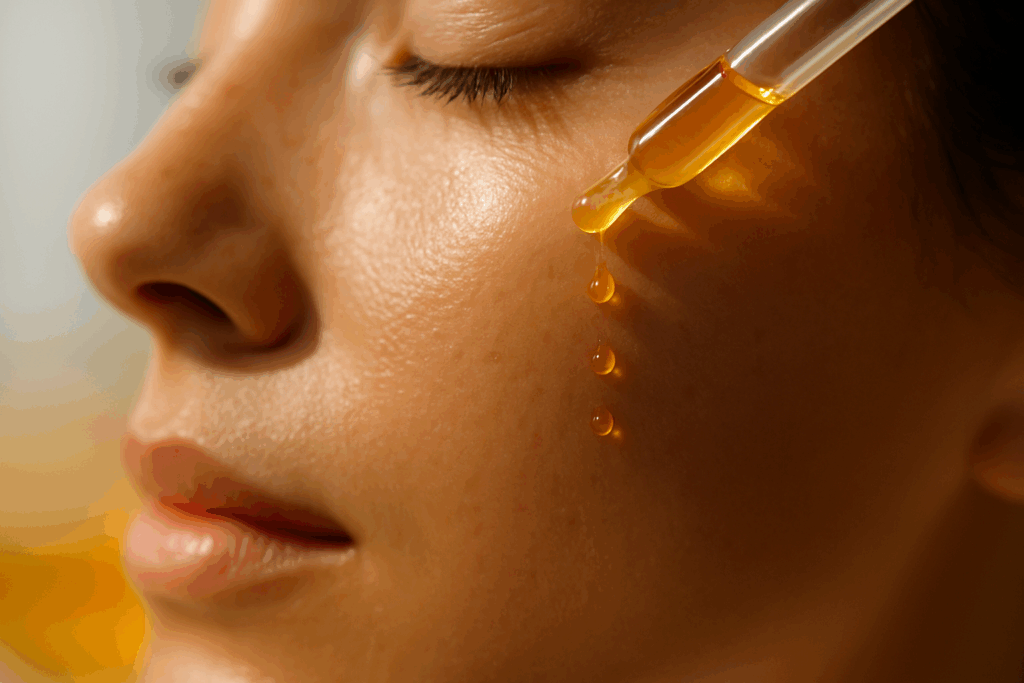
- Topical: infuse strands into rose water or a lightweight oil for direct complexion benefits.
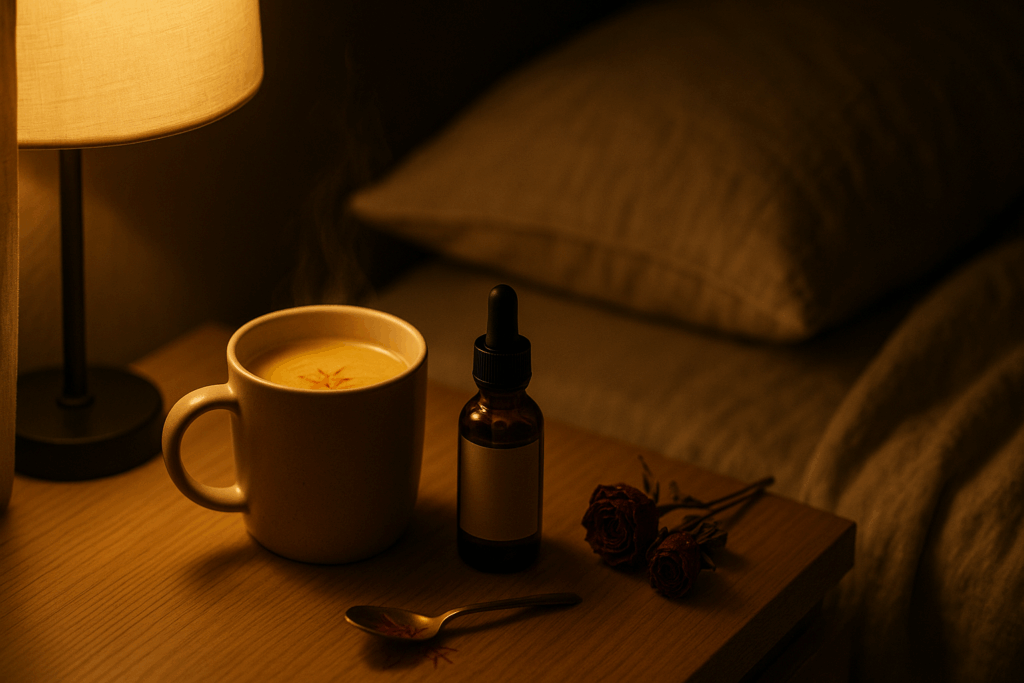
- Internal: a warm saffron milk or tea in the evening complements topical care by supporting relaxation and routine consistency.
- Combination: apply toner after cleansing, then a saffron‑infused oil, and finish with your moisturizer.
Quick & Easy Recipe: Saffron Rose Glow Toner
Ingredients:
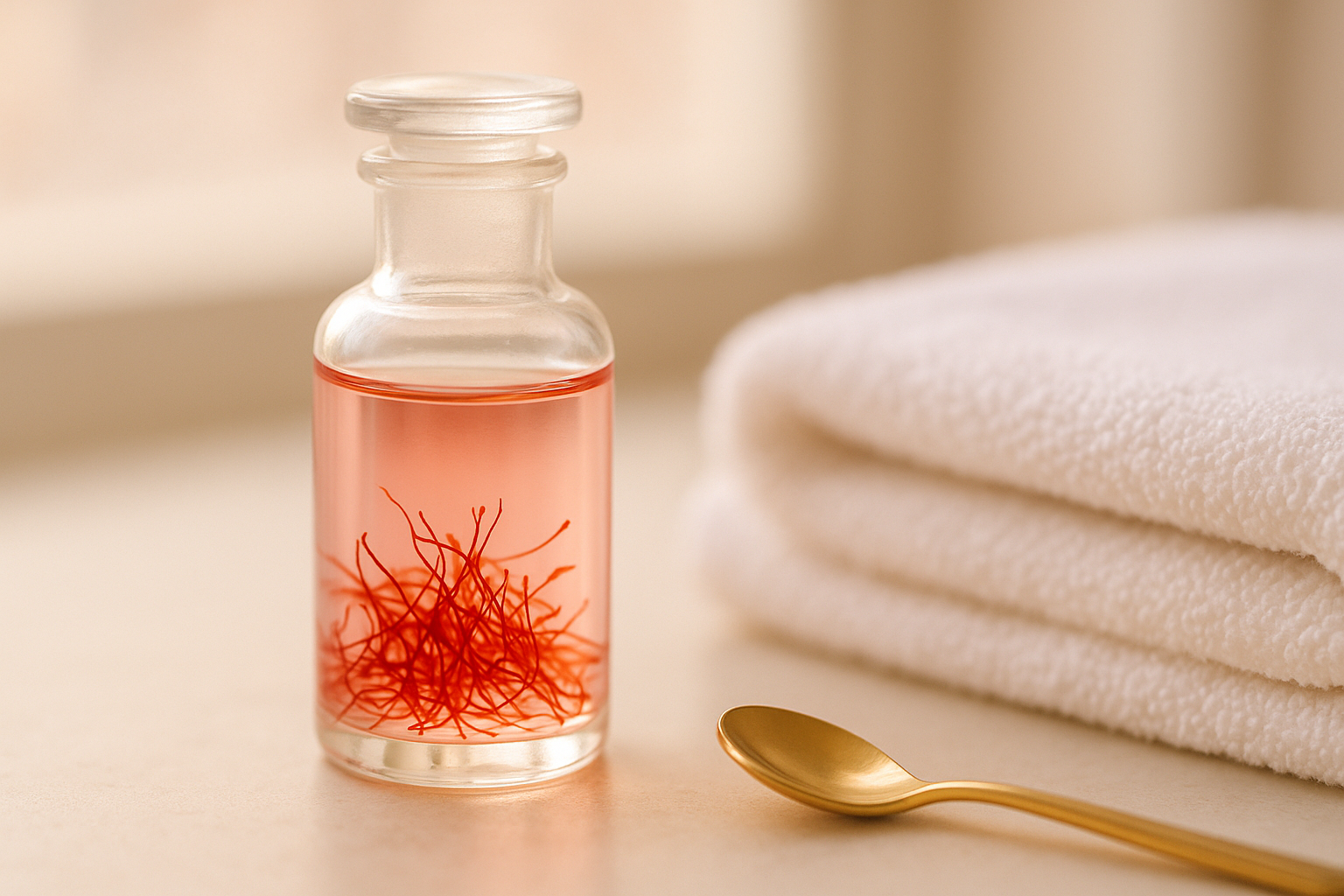
• 6–8 saffron strands • 3 tbsp rose water • 1 tbsp distilled water (optional to dilute) • 2–3 drops glycerin (optional, for extra hydration)
Instructions:
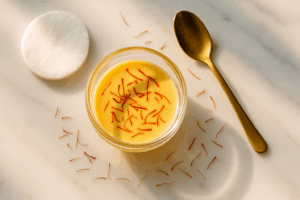
Place saffron in a clean glass bottle. Add rose water (and distilled water if using). Let infuse 6–12 hours until the liquid turns golden. Add glycerin, shake gently, and store refrigerated for up to 7 days. After cleansing, apply with a cotton pad or press into skin with clean hands. Follow with serum, moisturizer, and SPF (AM).
Quick & Easy Recipe: Saffron Honey Brightening Mask
Ingredients:
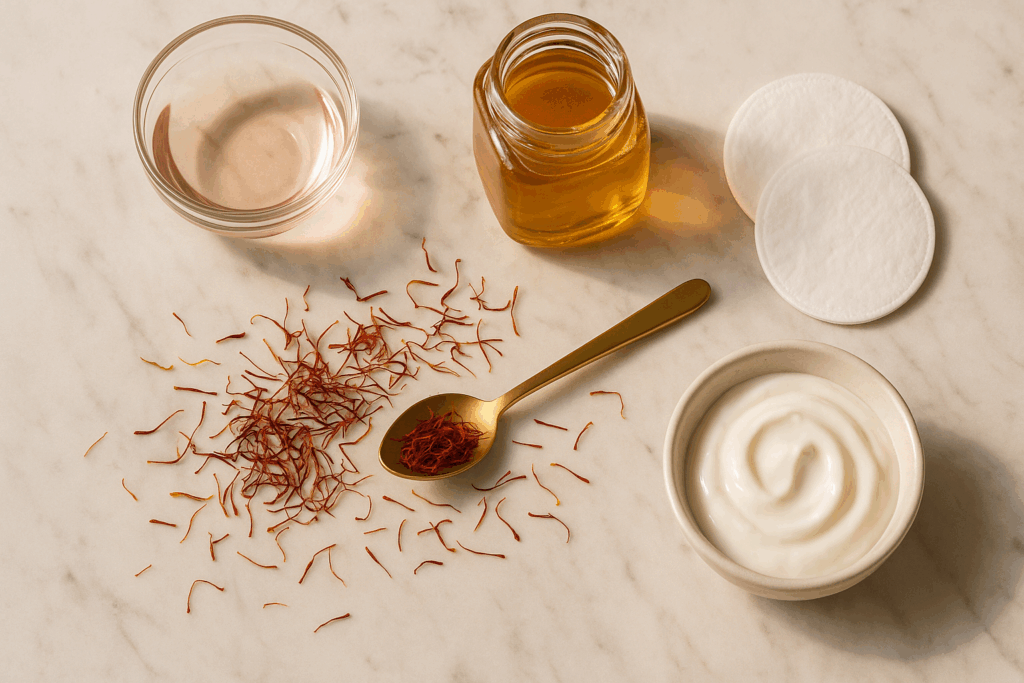
• 3–4 saffron strands (pre‑soaked in 1 tsp warm water for 10 minutes) • 1 tsp raw honey • 1 tsp plain yogurt (or aloe gel for sensitive skin)
Instructions:
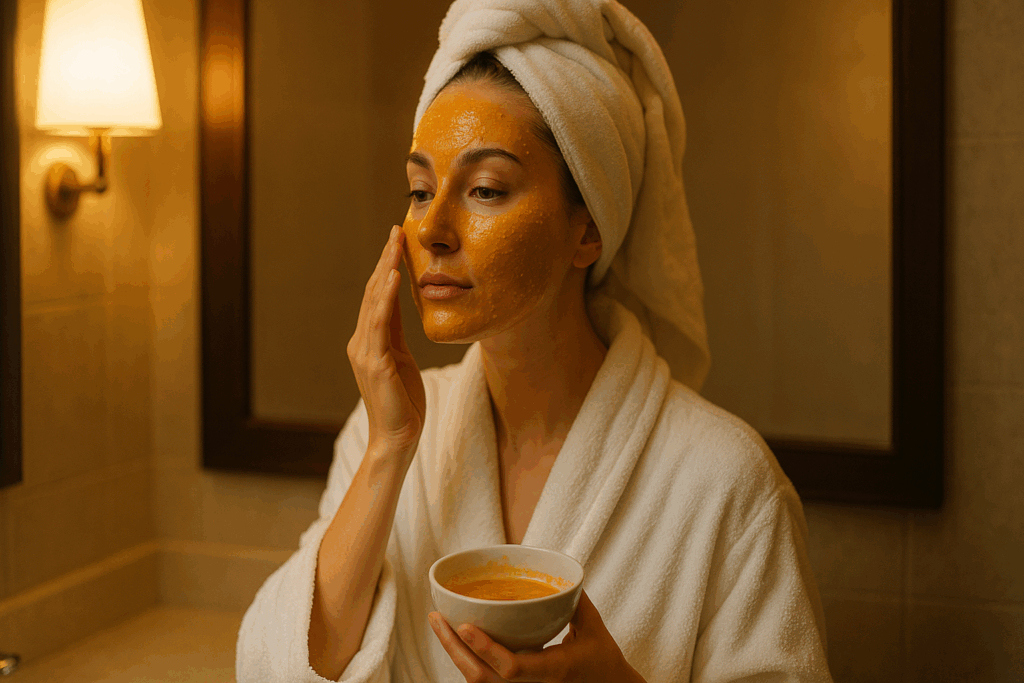
Mix soaked saffron with honey and yogurt (or aloe). Apply a thin layer to clean, damp skin. Leave on 10–12 minutes. Rinse with lukewarm water and pat dry. Use 1–2 times weekly for a soft, even, radiant look.
Tips for Buying and Storing Saffron
- Choose deep red threads with slightly orange tips; avoid dull or uniformly yellow strands.
- Buy whole threads from reputable sellers; powdered saffron is easier to adulterate.
- Store in an airtight glass jar away from light and heat to preserve potency.
- Soak strands before use to release color and bioactives.
- A little goes a long way — overuse can stain or irritate sensitive skin.
FAQs
Q: Can saffron lighten dark spots?
Saffron will not bleach the skin, but its antioxidants can help soften the look of dark spots over time and promote a more even tone with consistent use.
Q: Is saffron safe for sensitive or acne‑prone skin?
Yes, when diluted properly. Always patch test first and avoid applying directly to open blemishes.
Q: How long until I see results?
Most users notice enhanced glow within 2–3 weeks of regular use. Improvements in uneven tone may take 4–8 weeks.
Q: Can I use saffron with actives like vitamin C or retinol?
Yes. Use saffron toner or oil after gentle cleansing and before/after mild serums. On retinol nights, keep the routine simple to avoid over‑stimulation.
Q: Should I apply saffron daily?
You can use a diluted saffron toner daily. Masks and richer oils are best 2–4 times weekly, depending on skin tolerance.
Final Thoughts: Let Red Gold Elevate Your Routine
Saffron brings together tradition and modern skin science in one elegant step. Its antioxidants, soothing compounds, and glow‑boosting effects make it a smart addition for women seeking even tone, calm skin, and a soft radiance without harsh actives. Start with a simple toner or mask, stay consistent, and let this time‑tested ingredient enhance your daily ritual.