

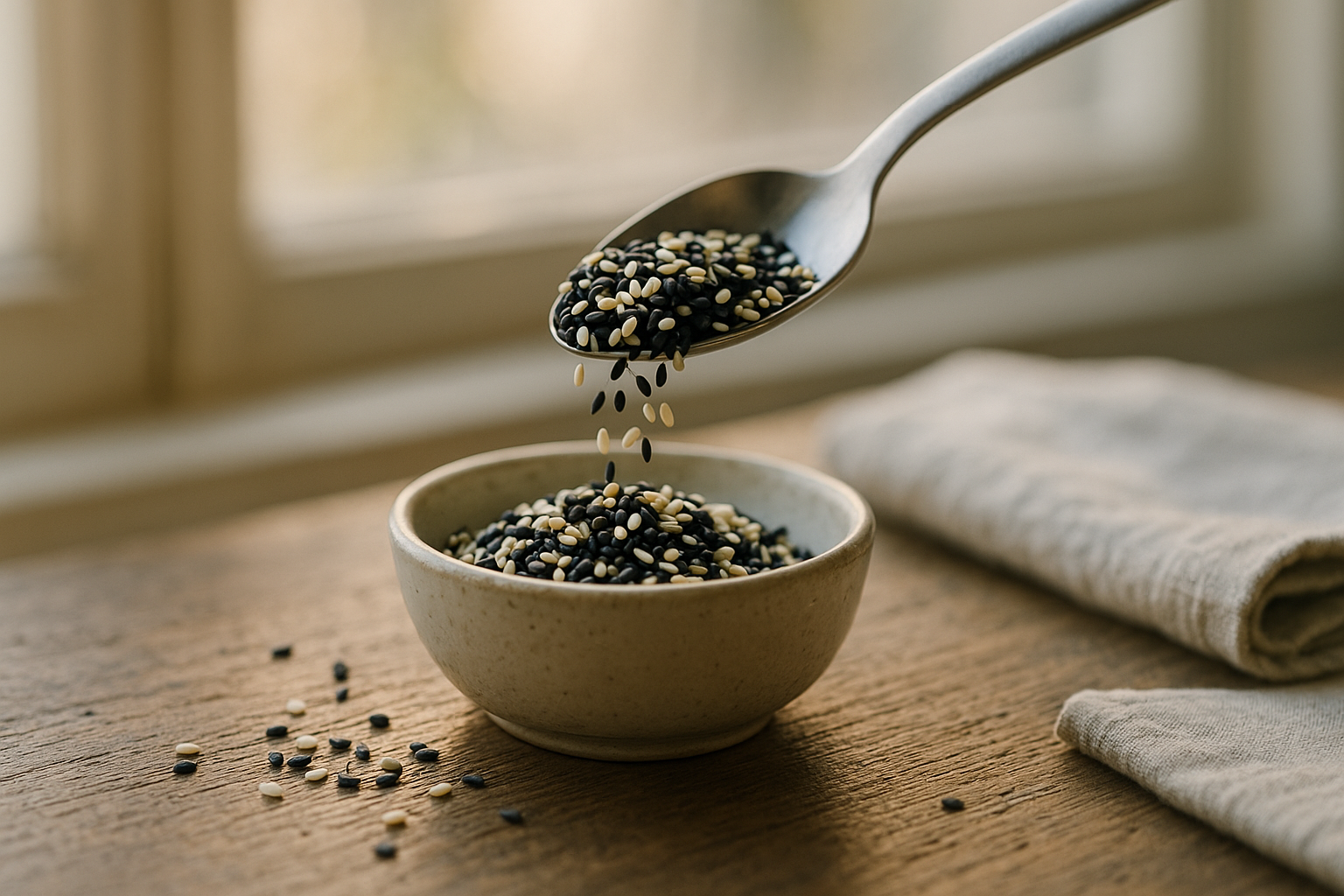

Small Seeds, Big Energy
When it comes to natural energy boosters, sesame seeds are often overlooked — but they shouldn’t be. These tiny, ancient seeds are loaded with powerful nutrients that help fuel your body, balance hormones, and support endurance, especially for women navigating busy lifestyles, hormonal shifts, or seasonal fatigue.
Used in traditional healing systems for centuries, sesame seeds — particularly black and white varieties — are known for their warming qualities, energy-building power, and deeply nourishing profile.
Let’s explore why these tiny seeds should become a daily essential in your diet.

Top 6 Health Benefits of Sesame Seeds for Energy and Wellness
- Boost energy naturally with iron, B vitamins, and magnesium
- Improve blood circulation and oxygen flow
- Balance hormones and support women’s reproductive health
- Strengthen bones, joints, and muscles with calcium and zinc
- Improve skin glow and hair strength
- Support digestion and boost metabolism
Why Sesame Seeds Are an Energy Superfood
Energy isn’t just about calories — it’s about how well your body produces and uses fuel. Sesame seeds provide:
- Iron – to carry oxygen in the blood
- Magnesium – to convert food into energy at the cellular level
- B vitamins – for mood and metabolism
- Healthy fats and protein – for long-lasting energy release
Together, these nutrients help reduce fatigue, prevent energy crashes, and support hormone-regulated energy rhythms — especially helpful for women experiencing PMS, perimenopause, or adrenal fatigue.
Nutritional Composition of Sesame Seeds (per 1 tbsp / ~9g)
- Calories: 52
- Protein: 1.6g
- Healthy fats: 4.5g
- Fiber: 1.1g
- Iron: 1.3mg
- Magnesium: 32mg
- Calcium: 88mg
- Zinc: 0.7mg
- B Vitamins: Thiamine (B1), Niacin (B3), Folate
Sesame seeds are rich in minerals, plant-based protein, and antioxidant lignans, making them a potent food for stamina, skin, and strength.
Sesame Seeds and Women’s Hormonal Health
Sesame seeds play a special role in seed cycling — a practice that uses different seeds throughout the menstrual cycle to balance estrogen and progesterone levels.
- During the luteal phase (days 15–28), sesame seeds help boost progesterone and reduce PMS symptoms like fatigue, irritability, and bloating.
- Their lignans support liver detox of excess estrogen, while zinc and selenium promote hormonal harmony.
This makes sesame seeds especially useful for women managing PCOS, irregular cycles, or energy dips before menstruation.
Daily Use: How to Add Sesame Seeds to Your Diet
Sesame seeds are versatile, nutty in flavor, and easy to include in everyday meals.
Suggested Daily Intake:
- 1–2 tablespoons of raw or roasted sesame seeds
Best Ways to Use Them:
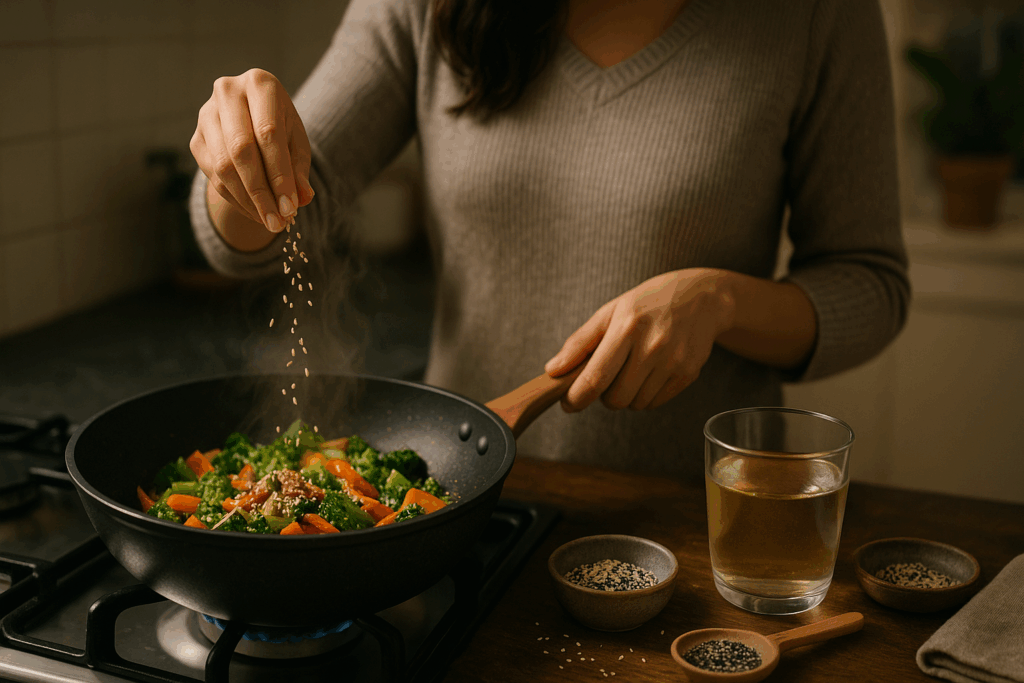
- Sprinkled over stir-fries, rice, or salads
- Mixed into yogurt, oatmeal, or smoothie bowls
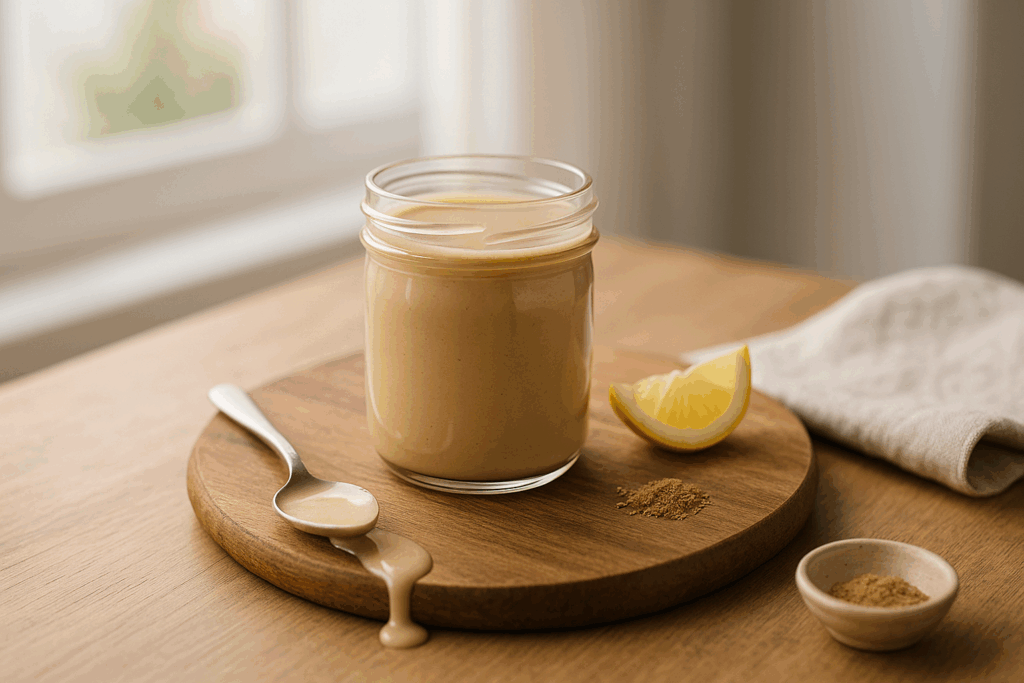
- Blended into tahini and used as a dressing or dip
- Added to baked goods or seed crackers
- Stirred into warm water with honey as a morning tonic
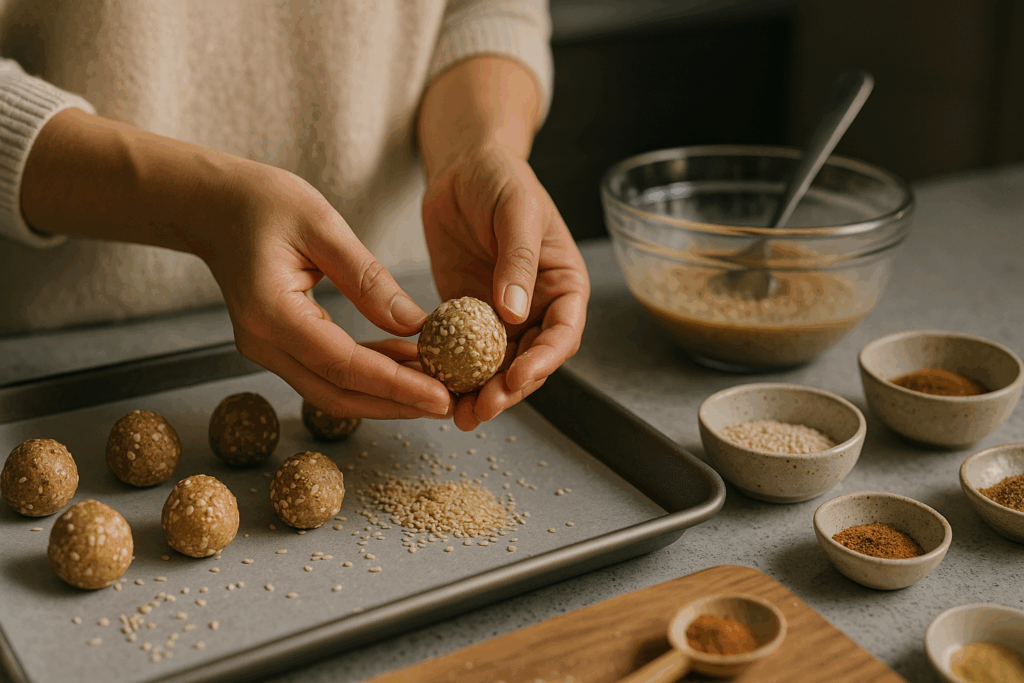
Quick & Easy Recipe: Tahini Energy Bites
A perfect snack for busy days and hormone-friendly energy.
Ingredients:
- 2 tbsp tahini
- 1 tbsp honey or date paste
- ¼ cup oats
- 1 tbsp ground flaxseeds
- 1 tbsp sesame seeds
- Pinch of cinnamon
Instructions:
Mix all ingredients into a sticky dough. Roll into small balls. Chill for 15–20 minutes and enjoy as a natural energy booster.
Tips for Buying and Storing Sesame Seeds
- Choose hulled or unhulled sesame seeds based on your digestive needs
- Black sesame seeds are more mineral-dense and warming — great for winter
- Store in a cool, airtight container to prevent spoilage
- Toast lightly to bring out flavor, but avoid high-heat roasting
- Blend into homemade tahini for a more bioavailable, creamy option
FAQs
Q: Are sesame seeds good for fatigue and low energy?
Yes. Their iron, magnesium, and B vitamins help support natural energy production and fight fatigue.
Q: Can sesame seeds help with hormone-related tiredness?
Absolutely. Sesame seeds are used in seed cycling to support progesterone and reduce PMS-related energy crashes.
Q: Should I eat black or white sesame seeds?
Both are nutritious. Black sesame seeds are higher in antioxidants and minerals — especially good for winter and hair health.
Q: Can I eat sesame seeds every day?
Yes. 1–2 tablespoons daily is safe and beneficial when included in a balanced, whole-food diet.
Q: Is tahini the same as sesame seeds?
Yes. Tahini is ground sesame paste. It’s easy to digest and a great way to absorb more of sesame’s nutrients.
Final Thoughts: Don’t Underestimate the Power of Seeds
In the world of wellness, small steps lead to powerful results — and sesame seeds are proof. Just a spoonful a day can help restore energy, support hormones, and improve overall vitality, especially during the colder months when your body needs warming, nourishing foods.
Whether sprinkled, blended, or baked, sesame seeds belong in your pantry — and in your daily diet. Start small, stay consistent, and feel the energy shift from within.